VR has no shortage of games worth playing. The problem is finding them. A handful of major releases dominate conversations while hundreds of smaller projects compete for attention across Meta Quest, PlayStation VR2 and PC VR. Some of these games are easy to overlook because they were released early in VR’s history, when the audience was considerably smaller. Others were limited to a particular headset or simply arrived without the marketing needed to reach a wider audience. Yet some of the most interesting VR experiences can be found among these overlooked releases. We’ve picked nine titles from across VR’s history that deserve more attention. These are the best VR games that almost nobody played compared with the best-known VR releases, despite offering something genuinely distinctive.
Wilson’s Heart
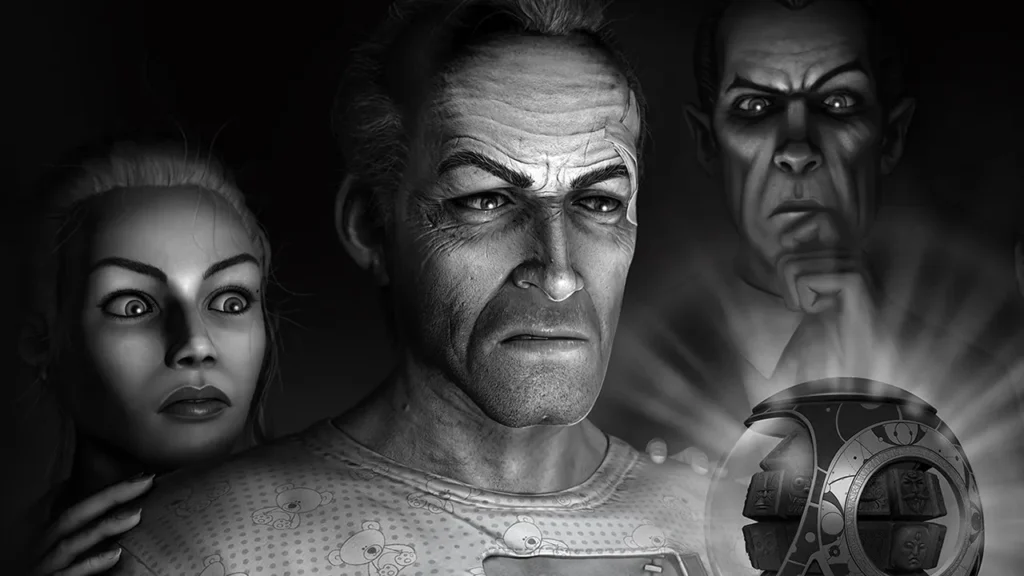
When the Oculus Rift arrived in 2016, developers were still figuring out what a full-length VR adventure should look like. Wilson’s Heart was one of the more ambitious answers to that question. Developed by Twisted Pixel Games, the psychological horror adventure begins with Robert Wilson (Peter Weller) waking up in a mysterious hospital in the 1940s. His heart has been replaced by an unknown mechanical device, and the hospital’s already unsettling atmosphere soon gives way to something considerably more sinister.
The game’s monochrome visual style is one of its defining characteristics, drawing heavily on classic horror films and psychological thrillers. Players explore the hospital, manipulate objects using motion controllers and uncover the truth behind the strange events unfolding around them. What makes Wilson’s Heart particularly interesting is how it combines cinematic storytelling with physical interaction. Rather than simply watching scenes unfold, players must search their surroundings, handle objects and investigate the environment themselves.
Despite coming from the studio behind The Gunstringer and other distinctive Xbox titles, it remained an Oculus Rift exclusive. That limited its potential audience from the outset, particularly as standalone VR subsequently became much more accessible than high-end PC VR. For anyone interested in the early history of VR narrative adventures, Wilson’s Heart remains well worth seeking out.
Edge of Nowhere
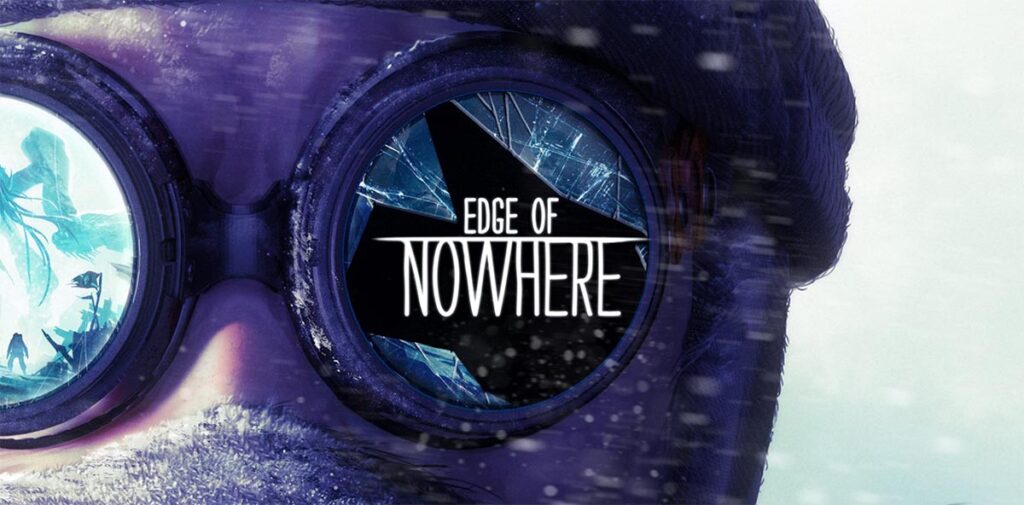
Insomniac Games is best known for franchises such as Ratchet & Clank, Resistance and Marvel’s Spider-Man. Less widely remembered is the studio’s early VR adventure, Edge of Nowhere. Released in 2016, the game follows Victor Howard as he searches for his missing fiancée in Antarctica. What begins as a rescue mission gradually descends into a disturbing journey involving monstrous creatures, impossible environments and elements of cosmic horror.
The unusual part is the perspective. Unlike most first-person VR adventures, Edge of Nowhere uses a third-person camera, allowing players to watch their character climb cliffs, navigate icy terrain and battle enemies. It sounds like an odd choice for VR, but that perspective allows Insomniac to create cinematic environments and dramatic changes in scale without requiring every interaction to happen directly through the player’s hands.
The Antarctic setting also gives the game a strong identity. Its frozen landscapes, remote research facilities and unsettling underground environments create a sense of isolation that suits the Lovecraftian-inspired story. The biggest obstacle to its wider recognition was platform availability. Like several early Oculus-funded games, Edge of Nowhere was developed exclusively for Oculus Rift rather than appearing across the growing range of VR headsets.

The Invisible Hours
What if a murder mystery allowed you to follow every suspect, examine every conversation and piece together the truth without ever being noticed? That’s the premise behind The Invisible Hours, developed by Tequila Works.
Set inside an isolated mansion belonging to inventor Nikola Tesla, the game begins with Tesla’s murder and a house full of potential suspects. Each character has their own motivations, secrets and movements through the story. Rather than playing as a traditional detective, you are effectively an invisible observer. You can follow characters through rooms, listen to conversations and revisit events from different perspectives to discover how the various storylines connect.
The most important mechanic is control over time. You can move between events, rewind moments and explore different strands of the narrative, gradually building a clearer understanding of what happened. This creates an experience unlike a conventional adventure game. The emphasis is less on solving puzzles through inventory combinations and more on paying attention to people, their relationships and the details of their surroundings.
The game can now also be played without a headset, but its original design is particularly well suited to VR. Being able to stand inside a room while characters carry on their conversations around you makes the mansion feel more like a theatrical stage than a conventional game environment. For anyone who enjoys detective stories, The Invisible Hours offers an unusually sophisticated approach to interactive storytelling.
From Other Suns
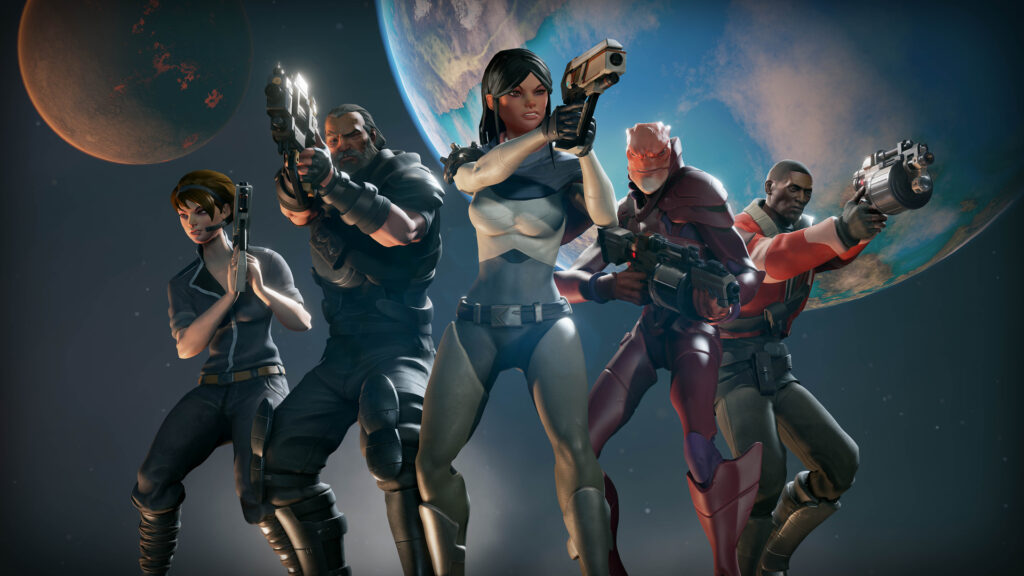
Co-operative VR games have produced some memorable experiences, but From Other Suns remains an especially interesting example of what the genre can offer. Developed by Gunfire Games, the studio subsequently known for Remnant: From the Ashes and Remnant II, this science-fiction adventure combines first-person combat with spaceship management and roguelite progression.
Players embark on a dangerous journey through a procedurally generated universe, confronting hostile aliens, robots and pirates while upgrading their ship and acquiring new equipment. The game supports solo play, but its central attraction is the ability to team up with two other players. One moment, you’re exploring an abandoned vessel or fighting off boarding parties; the next, you’re back aboard your ship discussing upgrades and preparing for another jump. There is a real sense of shared adventure to the structure. Each journey can unfold differently, and losing crew members can have serious consequences for the rest of the mission.
From Other Suns launched exclusively for Oculus Rift in 2017. That meant its audience was drawn from the relatively small early PC VR market, and it never expanded into the much larger standalone Meta Quest ecosystem. For players who enjoy co-operative shooters and games built around emergent situations, it’s an intriguing reminder that VR’s early PC catalogue contained ambitious ideas beyond the wave shooters that dominated the period.
FORM
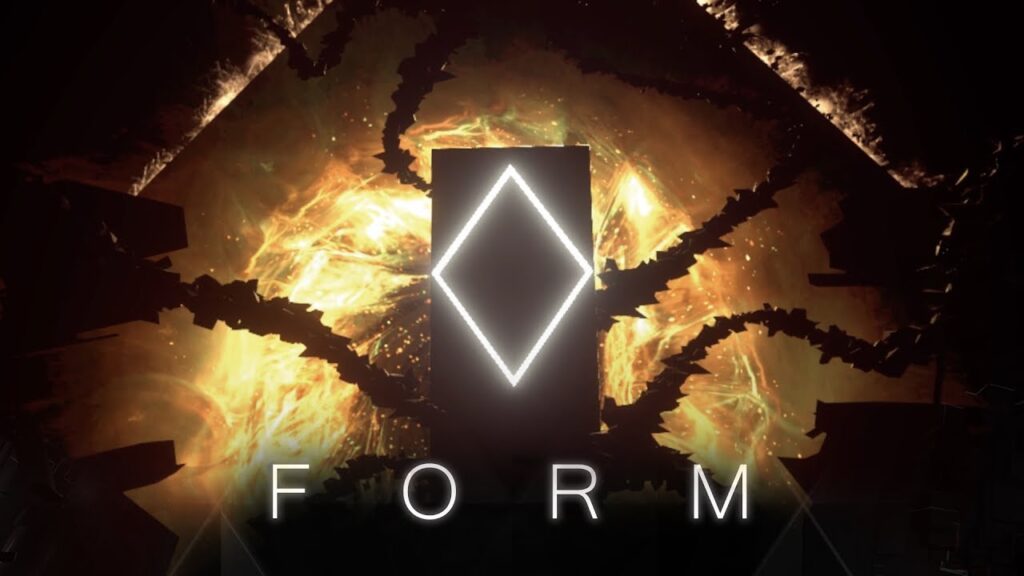
Some VR games are built around combat or elaborate stories. Others are about creating something that couldn’t exist in the same way on a conventional screen. FORM, from Charm Games, belongs firmly in the latter category.
Players take on the role of a physicist investigating a mysterious artefact that appears to connect with memories and dreamlike environments. As the world shifts around you, you must manipulate geometric objects, activate strange machinery and solve puzzles that gradually reveal more about the story. The environments are the main attraction. Structures transform, objects respond to physical manipulation, and abstract shapes become part of the puzzles rather than simply decorative elements.
Its central idea is that the player’s hands are the natural means of interacting with these environments. Instead of relying on traditional inventory menus or a large collection of buttons, the game lets players reach out, pick up objects and experiment directly. It also avoids the constant pressure found in many action games. There are no enemies to fight or timers to beat, allowing players to work through puzzles at their own pace.
FORM arrived in 2017, when many VR games were still demonstrating basic locomotion and interaction systems. Its focus on surreal environments and tactile puzzle solving offered a different vision of what the medium could be. If you enjoy atmospheric adventures that reward curiosity rather than reflexes, this is an excellent place to look beyond the usual recommendations.
Downward Spiral: Horus Station
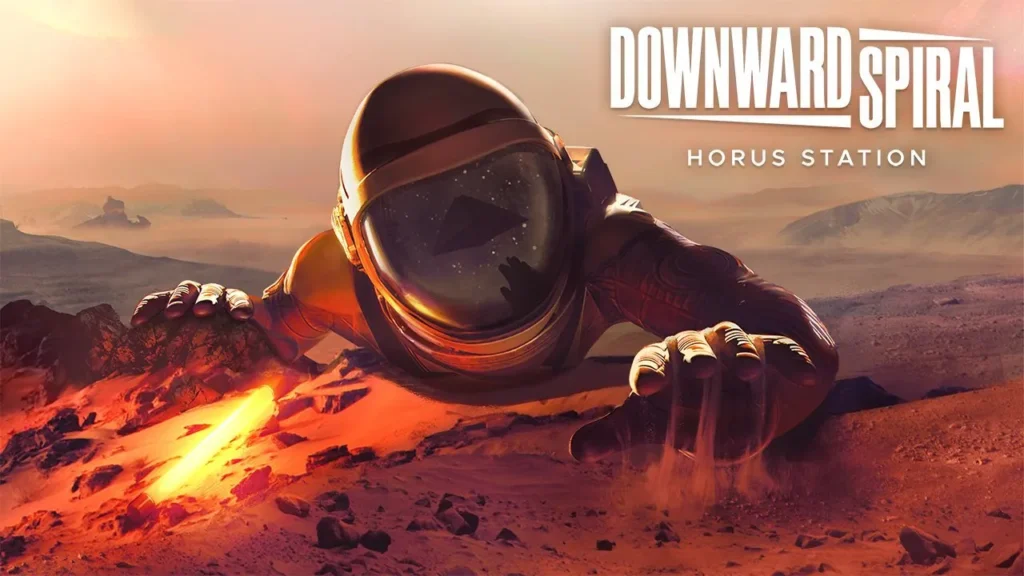
Zero-gravity movement presents an unusual design challenge. Without floors or conventional gravity, even navigating a corridor can become a completely different experience. Downward Spiral: Horus Station makes that challenge central to its design. Created by 3rd Eye Studios, the science-fiction thriller takes place aboard an abandoned space station. Players investigate what happened to its missing crew while exploring darkened corridors, solving environmental puzzles and dealing with hostile threats.
Instead of using conventional walking controls, movement relies on grabbing surfaces, pushing away from objects and using equipment to navigate the station. Tools such as grappling magnets and thrusters become essential to moving through the environment. The result is a distinctive form of exploration that feels more like working your way through a drifting spacecraft than walking through a conventional first-person game.
There are two approaches to the experience. Players can tackle the hostile encounters directly, using equipment as weapons, or choose an Explorer mode that removes the threats and focuses on atmosphere and puzzle solving. The game also supports co-operative play, offering another way to investigate the station.
Although it was released for both VR and traditional screens, its zero-gravity movement makes it especially interesting as a VR experience. The physical act of pushing off from a wall or pulling yourself towards a handhold gives the environment a different rhythm from most science-fiction adventures.
Paper Beast
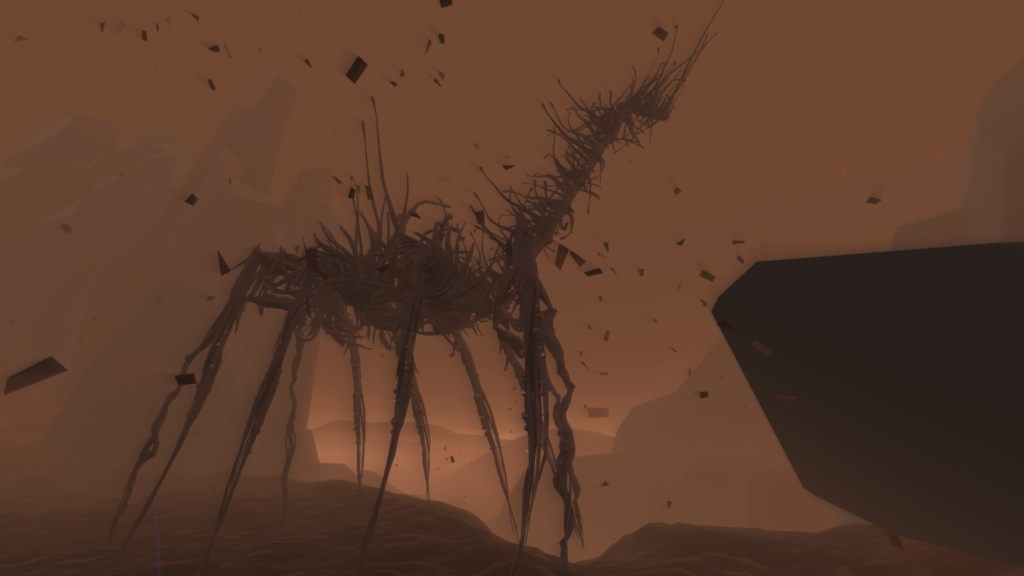
Created by Eric Chahi, the designer behind Another World and From Dust, Paper Beast is one of the more unusual exploration games in VR. Its setting is an imaginary ecosystem that seems to have emerged from the depths of the internet. Players enter a surreal wilderness inhabited by strange creatures, each with behaviours that respond to the environment and to the player’s actions.
Rather than concentrating on combat, the game asks players to observe these creatures, help them overcome obstacles and manipulate the landscape around them. Its physics systems are central to the experience. Players can redirect water, melt ice and change the environment to help creatures move through the world. Some puzzles rely on understanding how the ecosystem behaves rather than finding a specific object or pressing the correct button. There is also a sandbox mode that allows players to experiment with the environment, shaping terrain and changing conditions to see what happens.
The creatures are particularly memorable. Their folded, paper-like appearances give the world a distinctive visual identity, but they aren’t simply static models. They move through the environment and react to changes, helping to create the impression of a living ecosystem.
Paper Beast was originally released for PlayStation VR in 2020 before arriving on PC VR. It subsequently received a version for PSVR2, keeping the experience available on newer hardware. For players who want something more contemplative than another shooter or horror game, it’s an unusual adventure that rewards curiosity and experimentation.

The Mage’s Tale
VR has produced plenty of fantasy adventures, but relatively few traditional dungeon crawlers that let players physically cast spells. The Mage’s Tale, developed by inXile Entertainment, is one of the more substantial examples.
Set in the same universe as The Bard’s Tale, the game follows an apprentice mage attempting to rescue their kidnapped master. The journey takes players through ancient crypts, sewers and dungeons filled with traps, secrets and hostile creatures. Combat is based around spellcasting. Instead of simply selecting a spell from a menu, players physically perform actions with their hands to launch fire, ice, lightning and other magical attacks. The game also includes a spell-crafting system. Players can collect ingredients and use them in their workshop to produce different spells, encouraging experimentation with the tools available.
There is a familiar role-playing structure beneath the VR interaction, but the physical act of casting magic gives the combat a different rhythm from a conventional dungeon crawler. The game originally arrived during the early PC VR period, when comparatively few VR titles attempted lengthy fantasy adventures with spell systems, character progression and a structured campaign.
Fujii: A Magical Gardening Adventure
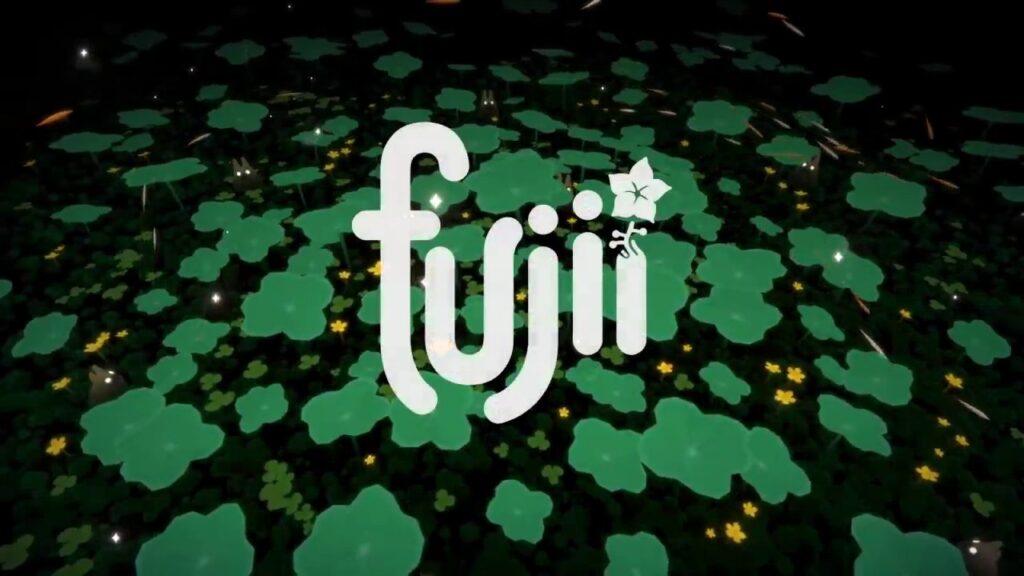
Not every overlooked VR game needs to be a massive adventure. Sometimes, the most interesting experiences are the ones that embrace what makes virtual reality feel different from the rest of gaming. Fujii, developed by Funktronic Labs, is a gentle exploration and gardening adventure built around that principle.
The game takes players through a series of colourful, dreamlike environments, where they collect seeds, nurture plants and introduce small creatures into the garden they create. Interaction is deliberately tactile. Rather than managing everything through menus, players use their hands to handle seeds, tend plants and shape their surroundings. The garden gradually becomes a personal space that reflects the objects and plants collected during the adventure.
There are puzzles to solve and new environments to explore, but the pace is relaxed. The experience encourages players to experiment with the plants and creatures they encounter rather than rushing from one objective to another. That makes Fujii a useful reminder that VR doesn’t always need to be about action, horror or realistic simulation. Physical interaction can also support a quieter experience based on discovery and care.
The game originally launched in 2019, during a period when VR’s most visible releases tended to concentrate on combat and fitness. Its gentle approach gave it a very different identity, but also made it easy to overlook among the larger action games. For anyone looking for something peaceful to play in VR, Fujii deserves a place on the shortlist.
The next time you’re looking for something new to play, consider stepping outside the usual recommendations. And do be sure to let us know your own favourite VR games that never seemed to achieve the popularity they deserved in the comments below.