VR has produced plenty of games that left players wanting more. That’s partly because VR developers have often had to work within much tighter budgets than their flatscreen counterparts. Even some of the medium’s most ambitious games can finish just as they feel like they’re getting started. Then there are games that establish a fantastic concept but never get the opportunity to develop it further. That has left VR with a surprisingly long list of games that we’d love to see return. As such, we’ve picked a selection of games that established something particularly interesting and where a sequel could take the original concept considerably further. Below are the VR games we believe most deserve a sequel.

Assassin’s Creed Nexus VR
Perhaps the most obvious example of a VR game that deserves a sequel is Assassin’s Creed Nexus VR. Ubisoft managed something that had seemed surprisingly unlikely for years: it successfully translated the core Assassin’s Creed fantasy into a full VR game. You can physically climb buildings, perform ‘Leap of Faith’ jumps, use hidden blades, fire bows and crossbows, throw weapons and move around sizeable open environments. More importantly, it was substantial.
Many gamers have put the campaign at around 20 hours and heralded it as one of the strongest VR adaptations of an established series. And that’s precisely why Nexus feels like it deserves another chance.
The first game had to prove that Assassin’s Creed could work in VR. A sequel wouldn’t need to spend as much time proving the concept.

Marvel’s Iron Man VR
Iron Man VR was never going to be an easy project. Camouflaj had to make a VR superhero game around one of Marvel’s most recognisable characters while also working within the considerable technical restrictions of the original PSVR. It succeeded remarkably well. Yet the first game was also clearly constrained by its hardware.
The PSVR camera and Move controllers were hardly the ideal tools for a game built around flying and shooting. Load times were another major problem, prompting Camouflaj to release an update specifically addressing them. The studio was openly interested in making a sequel, too.
In 2020, founder Ryan Payton said Camouflaj was “super interested” in Iron Man VR 2 if the first game performed well. Two years later, the studio was still describing itself as “all-in on VR” and expressing surprise that no follow-up had yet been announced. Of course, things have changed since then.
Camouflaj went on to make Batman: Arkham Shadow, and Meta subsequently ended its VR game development operations at the studio. That makes an official sequel look considerably less likely today.
Phantom: Covert Ops
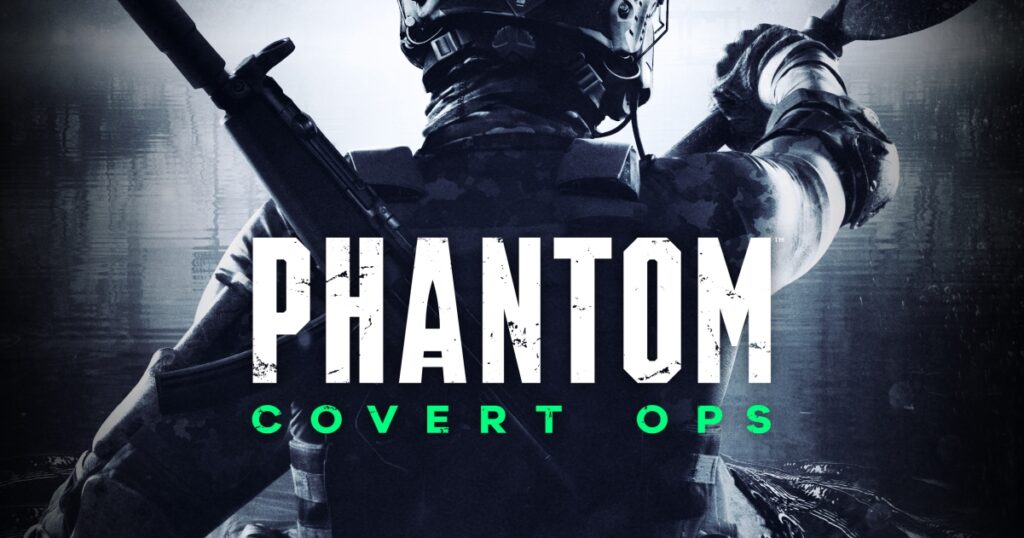
Few VR games are built around a more ridiculous idea than Phantom: Covert Ops. You are a highly trained Cold War operative. Your vehicle is a kayak. Yet somehow it works.
nDreams built the entire stealth game around paddling through waterways surrounding a Soviet military installation. Instead of being a gimmick, the kayak becomes an ingenious VR locomotion system. You physically paddle, turn your head to scout for enemies, lean around obstacles and reach for equipment while remaining seated.
The result was one of the better examples of VR-first design from the first Quest generation. nDreams described the game as being built around 1:1 movement and body awareness, with players able to approach encounters through stealth or direct attacks. The problem is that there was never a sequel.
That is a shame because the premise could actually be expanded rather than simply repeated. A sequel could move beyond the river environment and introduce larger naval facilities, open-water infiltrations, underwater sections or even different vehicles.
Stormland
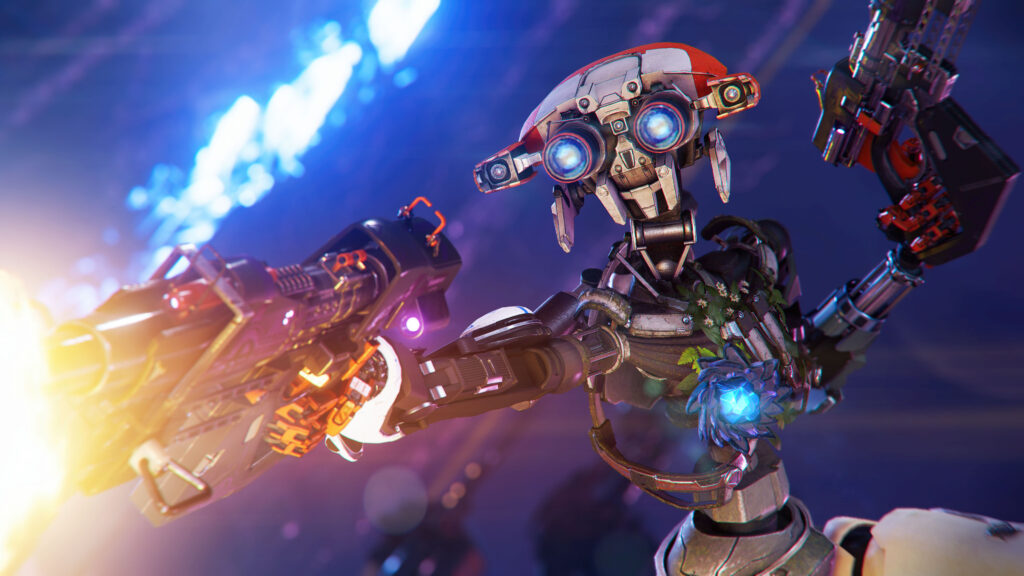
Stormland is one of the most frustrating games in VR history because it feels like the beginning of something much bigger. Insomniac Games created a science-fiction open-world shooter in which you play a robotic explorer traversing enormous floating islands. The important part wasn’t just the size of the world, it was how you moved through it.
You could climb almost everything, glide between islands and enter high-speed slipstreams that sent you flying across the environment. Combat, exploration and traversal were designed to work together rather than being separate systems. But Stormland remained exclusive to Oculus Rift, and there has never been a sequel.
That is particularly frustrating now because the game’s traversal mechanics would be an obvious match for more recent hardware. A Stormland 2 built around current PC VR hardware and perhaps PSVR 2 could retain the original’s excellent movement while creating a substantially bigger world.
The first game demonstrated that large-scale open-world movement could work in VR. Six years later, we’re still waiting for somebody to build on it.

Robo Recall
Before Quest, before Half-Life: Alyx and before most of the modern VR design conventions had properly settled, Epic Games released Robo Recall. It remains one of VR’s great arcade shooters.
The premise is simple: teleport around a futuristic city, shoot rogue robots, catch bullets, steal enemy weapons and tear machines apart with your bare hands. But Robo Recall was also deliberately compact.
The original design was essentially an arcade score-attack shooter rather than a huge campaign. That creates an obvious opportunity for a sequel. Imagine the original combat system expanded into larger environments, moving vehicles, more elaborate enemy types, destructible environments and a proper campaign.
Epic could have built an entire VR franchise around the technology. But it never happened. And that feels particularly unfortunate given how influential Robo Recall‘s interaction design was. Epic demonstrated that physically grabbing, disarming and dismantling enemies could be the entire foundation of a VR shooter.
Until You Fall
Sometimes a sequel is obvious because the original game simply ran out of room before its idea did. Until You Fall is one of those games.
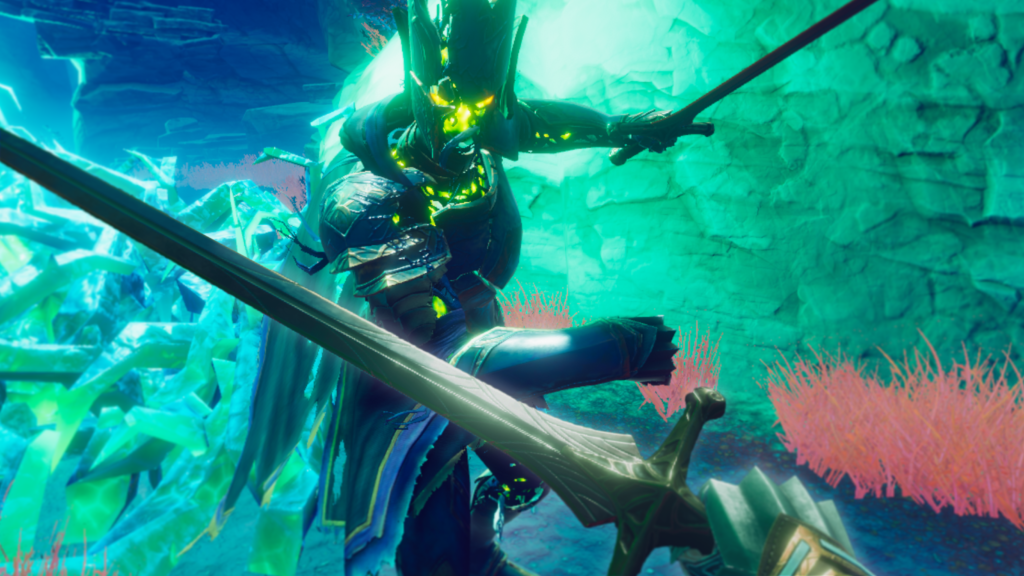
Schell Games built an exceptionally effective VR melee system around blocking, attacking, dodging and positioning your weapons. Its roguelite structure then added upgrades, different weapons and repeated runs. The combination worked extremely well. Schell itself describes it as a physically active VR hack-and-slash roguelite.
There is, however, an obvious weakness. The original eventually runs out of variety. There are only so many environments, enemy types and weapon combinations to work through before the very strong combat loop starts to reveal its limits.
That is exactly where a sequel could shine: a bigger world, multiple character classes, more sophisticated enemy AI, cooperative multiplayer and substantially more weapon variety could turn the excellent combat system into something closer to a full action RPG. Schell Games is still actively promoting Until You Fall in 2026, but its current public project lineup does not include an announced sequel.

The Last Clockwinder
It is difficult to think of many VR games with a more obvious sequel opportunity than The Last Clockwinder. The original revolves around a brilliant idea: record your physical actions and create clones that repeat them, allowing you to build increasingly complicated automated systems using nothing but your own movements. It sounds simple. It isn’t.
Players can create chains of clones that throw, catch, plant, harvest and operate machinery, effectively turning themselves into a living factory. The concept was extremely well received.
Developer Pontoco’s current website still presents The Last Clockwinder as one of its flagship games, while describing another project as being in development. There is no announced Last Clockwinder 2. That’s understandable for a small studio, but the sequel possibilities are enormous.
Imagine applying the clone system to completely different environments, new machines and much larger cooperative puzzles. A sequel could take that idea almost anywhere.

Star Wars: Tales from the Galaxy’s Edge
There is no shortage of Star Wars content in VR, but Tales from the Galaxy’s Edge still feels like the beginning of something rather than the finished version.
ILMxLAB deliberately created a new adventure on Batuu rather than recreating a familiar film scene, with players handling blasters, thermal detonators and other Star Wars equipment. The problem was scale.
The game was seen as a beautiful but basic shooter, with the campaign feeling too short and straightforward. The subsequent Last Call DLC substantially improved the experience, adding another two to three hours of the main campaign and additional side stories.
That’s almost exactly what we’d want from a sequel. The first game proved that a fully interactive Star Wars world could work in standalone VR, but a second game could simply go much bigger. Give us a longer campaign, more locations, more sophisticated enemies and more freedom to explore the Star Wars universe. There are thousands of possible stories that could be told.
Which VR Game Deserves a Sequel Most?
That’s the difficult question, and one we’re deliberately not answering with a ranking. Each game offers a different opportunity, and undoubtedly many readers will have their own favourite.
One of the most frustrating things about VR’s relatively small audience is that some genuinely excellent ideas have appeared once and then disappeared. Those ideas shouldn’t necessarily end with one game and VR is still young enough that a successful sequel can sometimes do more than simply provide another story. It can take an experimental mechanic that worked and develop it into something much larger.
That’s what makes these games so interesting. We’re not necessarily asking for another twelve hours of the same game; we’re asking developers to take the best ideas from these experiences and see how far they can go.
Let us know in the comments below which VR games you believe had fantastic mechanics that could be built upon even further with a sequel.