VR has produced some of gaming’s most memorable experiences over the last decade. It has also produced some spectacular misfires. Since consumer VR began in earnest in 2016, developers have experimented with established franchises, enormous open worlds, licensed properties and entirely new forms of interaction. Some of those experiments worked brilliantly. Others demonstrated just how easy it is to take a promising concept and turn it into a disappointing VR game. There are games that received mixed rather than universally negative reviews, but below you’ll find some of the biggest VR games that didn’t live up to expectations.
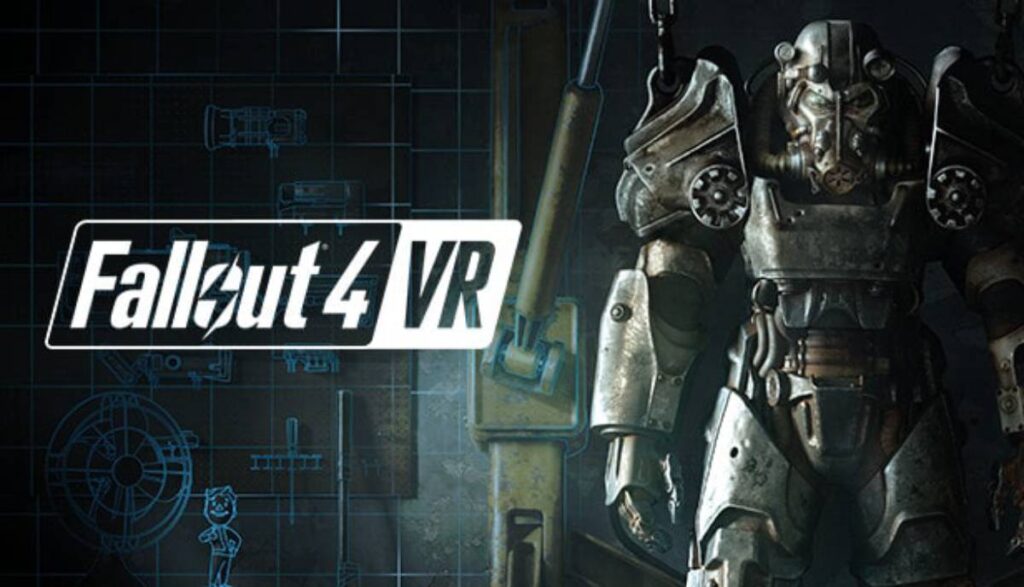
Fallout 4 VR
Few VR announcements generated as much excitement as Fallout 4 VR. Bethesda was taking one of the largest open-world RPGs ever made and putting the entire Commonwealth inside a headset. The developer repeatedly emphasised the scale of the experience, promising hundreds of locations, characters and quests, alongside VR-specific combat, crafting and building systems. The problem was that Fallout 4 VR often felt like exactly what it was: a huge conventional game adapted to VR rather than a game designed around the medium.
At launch, the game had awkward interaction systems, floating hands rather than a convincing player body, problems with scopes and a VR implementation that left plenty of the original game’s interface intact. Bethesda also initially released it without native Oculus Rift support, something that had been addressed by the time The Elder Scrolls V: Skyrim VR arrived on PC.
Bethesda did release patches. An April 2018 update added support for additional headsets and controllers, fixed room-scale stuttering and made various control and performance improvements. But the fundamental limitations remained.
The failure was therefore not that Fallout 4 was bad. It was that one of the most exciting opportunities for AAA VR never received the level of VR-specific refinement that its enormous potential deserved.
The fact that an active modding community has spent years addressing many of those shortcomings tells its own story.

ARK Park
The idea behind ARK Park was simple enough to sell itself. Take the dinosaurs from ARK: Survival Evolved, put players inside a prehistoric world and let them experience creatures that would be difficult to appreciate properly on a normal monitor.
Some of the results were genuinely impressive. Unfortunately, the game surrounding those dinosaur encounters wasn’t nearly as good.
ARK Park attempted to combine exploration with shooting, resource gathering and crafting. Critics repeatedly complained that these systems felt bolted on rather than forming a coherent experience. The contrast is what makes ARK Park such a memorable VR misfire. Standing next to a gigantic dinosaur in VR can be an impressive experience; having to grind through repetitive gameplay systems to get there is considerably less impressive.
In other words, the game’s greatest selling point was also the clearest demonstration of what it could have been.

Medal of Honor: Above and Beyond
Few games represented the idea of AAA VR more clearly than Medal of Honor: Above and Beyond. Developed by Respawn Entertainment and published by Oculus Studios, it was an enormous production for a relatively small VR market. The game delivered a lengthy World War II campaign, multiplayer and extensive historical documentary material.
The problem was that the finished game simply didn’t feel consistently like a AAA showcase. Medal of Honor: Above and Beyond wasn’t a terrible game. It was a $60 VR blockbuster from Respawn Entertainment and Oculus Studios that frequently felt like something considerably less ambitious than the marketing suggested.
It also struggled to build a lasting audience. Multiplayer servers were shut down after Respawn and Meta had effectively stopped supporting the game. It was intended to show what could happen when major resources were committed to a VR-exclusive blockbuster. Instead, it became one of the clearest examples of how difficult that business model was.

Hitman 3 VR: Reloaded
If Medal of Honor illustrates the difficulty of producing AAA VR, Hitman 3 VR: Reloaded demonstrates how badly a highly anticipated VR release can go when the final implementation simply isn’t ready. The modern Hitman trilogy is built around large sandbox environments, disguises, physical objects, improvised weapons and multiple approaches to assassination. Bringing that experience to Meta Quest 3 should have been an obvious opportunity.
XR Games promised a significant VR adaptation rather than merely copying the existing VR mode. The launch version did not live up to those expectations.
Visual problems, bugs and gameplay that remained too close to the flatscreen version. The technical problems were severe enough to overshadow the underlying game. Textures looked poor, geometry popped into view, lighting was inconsistent and performance problems could make certain sections unpleasant to play. More importantly, the game lacked much of the post-launch content that had become part of Hitman‘s broader World of Assassination experience, including Freelancer and the previous games’ levels.
Patches improved some of the game’s visuals, but there were still serious issues including new stuttering in some missions and fundamental problems with the way VR interaction had been implemented.
The problem wasn’t the Hitman concept. It wasn’t even necessarily the limitations of Meta Quest 3. It was the gap between the potential of the concept and what actually shipped.

RollerCoaster Tycoon Joyride
Few games on this list have a greater disconnect between their name and what they actually are. RollerCoaster Tycoon is famous for building and managing theme parks. RollerCoaster Tycoon Joyride is, at least in large part, a VR rail shooter.
That isn’t necessarily a bad idea. It just isn’t what most people would expect from RollerCoaster Tycoon. Worse, even the rollercoaster-building part wasn’t particularly well suited to VR.
The actual construction was performed in cinema mode rather than inside VR, meaning the player only entered VR once the coaster had been created. Then came the crashes. The game became often stuck when attempting to ride a newly created coaster, crashed multiple times and could even cause the player to drift outside the coaster car.
Perhaps the most revealing criticism is that the shooting mechanic actually overshadowed the rollercoasters. You’re riding a coaster through a theme park while shooting targets with a gun. That might make a perfectly serviceable VR arcade game. It just isn’t much of a RollerCoaster Tycoon game.

Justice League VR
Superhero games almost seem designed for VR. You can put on Batman’s cowl, become Superman, throw Wonder Woman’s weapons or control Cyborg’s technology. Justice League VR had all of those ingredients. What it didn’t have was much of a game.
The project allowed players to take on different Justice League heroes through a series of short experiences. The problem was that each character effectively received their own small minigame rather than a substantial superhero adventure. The collection was uninspired and frustrating, with the entire package taking less than an hour to complete.
Even the game’s better ideas tended to be undermined by their implementation. Superman’s section, for example, asked players to fly forward while using their hands and head to steer and fire heat vision, but the mechanic was tiring and disorientating rather than making players feel genuinely superhuman.
The game also illustrates one of the stranger phases of early VR. A major entertainment company could have used VR to make something genuinely special with the Justice League licence. Instead, the resulting product felt closer to a collection of promotional experiences.

MARVEL Powers United VR
If Justice League VR showed the problem from the DC side, Marvel Powers United VR provided the Marvel version. Developed by Sanzaru Games and released as an Oculus Rift exclusive in 2018, Marvel Powers United VR featured 18 playable Marvel heroes and was built around four-player cooperative combat.
The idea was undeniably exciting. Actually becoming Hulk, Deadpool, Captain Marvel or another Marvel character in VR could produce exactly the sort of experience the medium is capable of delivering. And when it worked, it did.
The problem was that the underlying game was largely a wave-based shooter. Repetitive gameplay, bland enemies and lack of meaningful story, exploration or character progression. The strongest heroes were genuinely enjoyable, while many others felt like variations on the same underlying template. The result was an impressive technical showcase wrapped around a relatively shallow game.
And then its lifespan became part of the story. Oculus removed Marvel Powers United VR from sale in late 2020 and announced that existing owners would lose access on 1st March, 2021. The shutdown applied to the entire game, including single-player content. The game was therefore not only relatively shallow for such a major licence — it eventually ceased to exist as a playable product.
That’s a particularly awkward legacy for one of the most prominent VR superhero games ever released.

Firewall Ultra
Firewall Ultra is one of the clearest examples of the difficulties facing VR multiplayer. It was supposed to be one of the major PSVR 2 shooters: the sequel to Firewall Zero Hour, a game that had developed a loyal audience on the original PlayStation VR. But Firewall Ultra launched with significant problems.
At launch is was persistently disappointing and suffered from lengthy matchmaking, lack of motion controls, limited launch content and broken progression system. That is particularly important because Firewall Ultra was not an obscure indie experiment. It was a major PSVR 2 release intended to serve as one of the platform’s showcase multiplayer games.
Yet the fundamentals of playing it weren’t as smooth as expected, and much of the content and progression systems needed additional work after launch. There was eventually a more serious problem. First Contact Entertainment, the studio behind Firewall Ultra, announced its closure in December 2023, just four months after the game launched. The company explicitly attributed the decision to a lack of support for VR within the wider games industry and said it could no longer justify the expense of developing AAA VR games.
Then came the final chapter. Sony’s PlayStation Blog announced in March 2026 that Firewall Ultra‘s online services would terminate on 17th September, 2026. Because the game requires an online connection, it became unplayable from that date.
So as of September 2026, Firewall Ultra isn’t merely a struggling multiplayer game. It’s gone.

Gungrave VR
There are games that disappoint. And then there is Gungrave VR.
The PS2-era Gungrave series had its fans, and the concept seemed well suited to VR: an absurdly overpowered gunslinger mowing down waves of enemies while dodging incoming fire. The finished game, however, was exceptionally poorly received.
What arrived was a stripped-back PS2-style shooter that could be completed in less than an hour. The control scheme, lack of story content and failure to make meaningful use of PSVR highlighted that just because a game feels as though it should work in VR, doesn’t mean it’s an easy thing to implement.
The particularly unfortunate aspect is that the underlying Gungrave fantasy isn’t a bad match for VR. Dodging bullets and firing two oversized guns simultaneously could have been entertaining.
Instead, the finished game felt like a much older game placed into a headset without taking the opportunity to rethink how it should work.

Unearthing Mars 2: The Ancient War
This is the most obscure game on the list, but the critical reception makes it difficult to ignore. Unearthing Mars 2: The Ancient War attempted to expand the original Unearthing Mars into a larger sci-fi VR shooter, adding more substantial combat, a greater range of weapons and a more ambitious story. The production values were not the problem. The gameplay was.
Dull shootouts and a story that was both boring and difficult to understand. The impressive visuals couldn’t compensate for the lacklustre gameplay. Its campaign was also short, with player feedback at the time commonly putting completion around two to three hours.
The game therefore ended up in an awkward middle ground. It wasn’t technically a disaster, and it wasn’t completely broken. It simply didn’t offer enough compelling gameplay to turn its attractive science-fiction setting into a memorable VR experience.
That’s arguably one of the most common failure modes in VR. A game can look impressive in screenshots and trailers, but once you’re actually wearing the headset, the question becomes much simpler: is there anything worth doing?
Ultimately, for every Half-Life: Alyx, Batman: Arkham Shadow or Resident Evil 4, there are games like these showing developers exactly what can go wrong when the technology, design or expectations don’t quite line up. What are your biggest VR fails? Let us know in the comments below!