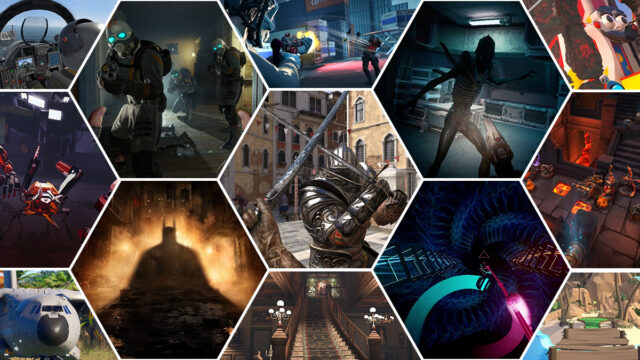
One of the biggest advantages of VR is the variety of experiences it offers. Whether you’re interested in exploring enormous fantasy worlds, fighting zombies, racing supercars or simply playing a few rounds of mini golf, there’s a VR game for almost every type of player. However, finding the right games isn’t always straightforward. The VR market is spread across several platforms, and some of its best experiences are exclusive to a particular headset. Others are available across multiple platforms, sometimes with substantially different versions. We’ve put together a selection of the best VR games across some of the medium’s biggest genres.
On this page:
- Action & Adventure
- Assassin’s Creed Nexus VR
- Batman: Arkham Shadow
- Shooters & Tactical Combat
- Half-Life: Alyx
- Forefront
- Horror
- Alien: Rogue Incursion
- Resident Evil Village VR
- Role-Playing Games & Dungeon Crawlers
- The Elder Scrolls V: Skyrim VR
- Asgard’s Wrath 2
- Fighting & Physics-Based Combat
- Blade & Sorcery
- UNDERDOGS
- Racing
- Gran Turismo 7
- Downtown Club
- Flight & Space Simulations
- Microsoft Flight Simulator 2024
- VTOL VR
- Rhythm & Music
- Beat Saber
- Synth Riders
- Sports & Fitness
- Walkabout Mini Golf
- LES MILLS BODYCOMBAT
- Puzzle & Escape Rooms
- I Expect You To Die 3
- The 7th Guest
- Simulation
- PowerWash Simulator VR
- Kayak VR: Mirage
- Co-operative & Multiplayer
- Demeo
- PAYDAY: Aces High
- Finding the Best VR Game for You


Action & Adventure
Action-adventure games have become one of VR’s strongest genres, with developers increasingly creating substantial campaigns rather than focusing on shorter experimental experiences. These games combine exploration, combat, puzzles and storytelling, often making particularly good use of VR’s physical interaction systems.
Assassin’s Creed Nexus VR
Ubisoft’s Assassin’s Creed Nexus VR is one of the most ambitious adaptations of an established gaming franchise to VR. Rather than simply recreating a familiar Assassin’s Creed story, the game introduces an original adventure featuring three of the series’ most recognisable protagonists: Ezio Auditore, Kassandra and Connor.
Players can climb buildings, perform parkour, blend into crowds, use hidden blades and carry out air assassinations, all through a first-person VR perspective. The game also features substantial environments inspired by historical locations, allowing players to explore and approach missions in different ways. The ability to physically climb, fight and use the series’ familiar gadgets makes Nexus particularly suited to VR.
Batman: Arkham Shadow
Camouflaj’s Batman: Arkham Shadow demonstrates that a major superhero franchise can translate surprisingly well into VR. Set within the established Arkham universe, the game follows Batman as he investigates a growing threat to Gotham City involving the mysterious Rat King and his followers.
The familiar Arkham combat system has been redesigned around physical VR interaction, with players using punches, counters, gadgets and environmental interactions to deal with enemies. There is also stealth gameplay, detective work and exploration, giving the experience considerably more variety than a straightforward fighting game.
The game is particularly notable for being a full-length, standalone VR-exclusive entry in the Arkham series rather than a smaller promotional experience.


Shooters & Tactical Combat
First-person shooters have been an important part of VR since the first consumer headsets arrived. The ability to physically aim weapons, take cover and interact with equipment gives the genre a different feel from conventional shooters.
Half-Life: Alyx
Valve’s Half-Life: Alyx remains an obvious starting point for anyone interested in VR shooters. Set between the events of the original Half-Life and Half-Life 2, the game follows Alyx Vance as she fights the Combine occupation of City 17. The campaign features a substantial collection of weapons, puzzles and encounters, but its real strength is the interaction. Players physically reload weapons, search through shelves, manipulate objects and use the gravity gloves to retrieve items from a distance.
The environments are remarkably detailed, and the game makes excellent use of VR to create memorable encounters with familiar Half-Life enemies, including headcrabs and Combine soldiers.
Forefront
For players who prefer large-scale multiplayer battles, Forefront is one of the more ambitious VR shooters available. Developed by Triangle Factory, the game supports battles involving up to 32 players, with different classes, large environments and a collection of military vehicles.
Players can choose between roles such as Assault, Engineer, Medic and Sniper, each offering different weapons and equipment. Teams can also use helicopters, tanks, boats and ground vehicles to capture objectives and gain an advantage. The emphasis is on teamwork and coordinated combat, with larger battles offering a very different experience from the smaller arenas commonly found in VR shooters.


Horror
Horror is arguably one of the genres that benefits most from VR. The ability to physically explore dark environments, look around corners and encounter enemies at close range creates an experience that is difficult to reproduce on a conventional screen.
Alien: Rogue Incursion
Survios’ Alien: Rogue Incursion is an original single-player horror adventure set within the Alien universe. Players take control of former Colonial Marine Zula Hendricks, investigating a Weyland-Yutani research facility on the planet Purdan. As expected, things quickly go wrong when the facility’s Xenomorph infestation becomes apparent.
The game combines exploration, stealth and combat, with players managing weapons and ammunition while searching for a way to survive. The Xenomorphs are particularly effective in VR because they can emerge from unexpected locations, forcing players to pay attention to their surroundings rather than simply looking straight ahead.
Resident Evil Village VR
Capcom’s Resident Evil Village offers one of the most substantial VR horror campaigns available on PSVR2. The game follows Ethan Winters as he searches for his kidnapped daughter in a remote European village filled with disturbing creatures and dangerous characters.
The VR Mode converts the entire main campaign into a first-person experience, with motion-controller support allowing players to handle weapons, block attacks and interact with objects. The game’s different locations provide considerable variety, from the enormous Castle Dimitrescu to the more psychological horror of House Beneviento.
The latter is particularly effective in VR, with its focus on vulnerability and unsettling encounters rather than conventional combat. The VR Mode is available as a free download, although players must own the full PS5 version of Resident Evil Village.

Role-Playing Games & Dungeon Crawlers
Traditional RPG mechanics can work particularly well in VR, giving players the opportunity to explore enormous worlds, develop characters, collect equipment and physically engage in combat.
The Elder Scrolls V: Skyrim VR
Few games offer the same scale of adventure as Skyrim VR. Bethesda brought its enormous fantasy RPG into VR, including the complete original campaign and all three official add-ons: Dawnguard, Hearthfire and Dragonborn.
Players can explore the province of Skyrim, join factions, complete quests, discover dungeons and fight dragons using motion-controller combat and magic. The original game wasn’t designed specifically for VR, and some of its interactions still rely on conventional RPG systems. However, the sheer amount of content makes it one of the most substantial fantasy adventures available in VR.
Its modding community also continues to provide additional improvements, including better player-body representation, physical interaction and visual enhancements.
Asgard’s Wrath 2
Sanzaru Games’ Asgard’s Wrath 2 is one of the biggest standalone VR role-playing games. Players take the role of a Cosmic Guardian, travelling through worlds inspired by Egyptian mythology while attempting to stop Loki’s plans from threatening reality. The adventure features several playable mortal heroes, each with different abilities, weapons and approaches to combat. There are extensive environments to explore, puzzles to solve, equipment to collect and enemies to defeat.
Its progression systems also give players plenty of reasons to continue exploring, with character development and equipment upgrades forming an important part of the experience. The scale is particularly impressive given that the game was built specifically for standalone Meta Quest hardware rather than relying on a connected gaming PC.

Fighting & Physics-Based Combat
VR has produced some particularly interesting fighting games, largely because physical interaction allows players to handle weapons and engage in combat in ways that aren’t possible with conventional controllers.
Blade & Sorcery
Blade & Sorcery is one of the most recognisable physics-based combat games in VR. Developed by WarpFrog, the medieval fantasy sandbox allows players to fight using swords, axes, bows, shields and magic, with a physics system that governs how weapons and objects interact with enemies.
Rather than relying on predefined attack animations, the game uses physical weapon movements and collision systems to determine how combat unfolds. Players can block attacks, parry weapons, grab opponents and use the environment to their advantage. The result is a particularly open-ended combat system where players can experiment with different weapons and fighting styles.
The PC version also benefits from extensive community modding, while the separate Blade & Sorcery: Nomad release brings the experience to standalone Meta Quest headsets.
UNDERDOGS
One of the more unusual VR fighting games is UNDERDOGS, a physics-based mech brawler from One Hamsa. Players pilot a massive mechanical fighting machine, entering underground arenas to battle waves of enemy robots and other mechs.
The game combines roguelike progression with a substantial collection of weapons, equipment and upgrades. Players can build increasingly powerful machines, experimenting with different combinations of tools and combat systems as they progress. Unlike traditional VR sword-fighting games, UNDERDOGS focuses on large-scale mechanical combat, with players using powerful arms and weapons to smash through opponents.
Its distinctive visual style and emphasis on physical interaction make it a particularly different alternative to the more conventional fantasy fighting experiences available in VR.


Racing
Racing games are particularly effective in VR because they allow players to sit inside the vehicle rather than simply watching it from another camera angle.
Gran Turismo 7
For realistic circuit racing, Gran Turismo 7 is the obvious recommendation for PSVR2 owners. Polyphony Digital’s racing simulator includes an extensive collection of licensed vehicles, detailed circuits and a substantial career mode. Its VR support allows players to experience almost the entire game from inside the cockpit.
The VR Showroom also allows players to examine their cars from different angles, appreciating the level of detail in the vehicle models. The combination of eye tracking, foveated rendering and HDR visuals makes particularly effective use of PSVR2’s hardware.
Downtown Club
For standalone VR racing, Downtown Club offers a more accessible alternative. Developed by Commuter Games, the title focuses on urban motorsport, with a collection of vehicles and environments designed around fast-paced arcade-style racing. The controls have been developed specifically for VR, allowing players to steer and operate their vehicles using virtual controls while experiencing the action from the cockpit.
Its urban environments and emphasis on drifting make it particularly suited to players who want something closer to an arcade racer than a complex motorsport simulation.

Flight & Space Simulations
Flight simulators offer some of VR’s most convincing cockpit experiences, allowing players to operate aircraft and explore environments from a first-person perspective.
Microsoft Flight Simulator 2024
Microsoft’s Flight Simulator 2024 is perhaps the most ambitious flight simulator available to VR players. The game recreates the entire planet using geographical data, terrain, buildings, airports and atmospheric effects. Players can fly a wide selection of aircraft, taking off from real-world locations and travelling across continents.
Its VR implementation allows players to examine cockpit instruments, look around the aircraft and experience the surrounding environment in three dimensions. The simulation also includes a career mode, a range of aviation activities and increasingly complex aircraft systems.
VTOL VR
For a flight simulator built specifically around VR, VTOL VR is an excellent option. The game places players in the cockpit of modern military aircraft, with a focus on operating the controls and systems physically.
Unlike many traditional flight simulators, it doesn’t require a conventional HOTAS setup. Players use their VR controllers to interact with cockpit switches, buttons, displays and flight controls. The result is a more direct form of aircraft simulation, where flying involves considerably more than simply manipulating a joystick and watching the instruments. There are different aircraft to master, with missions involving air-to-air combat, ground attacks and other military operations.


Rhythm & Music
Rhythm games have become one of VR’s most established genres, combining music with physical movement and increasingly challenging gameplay.
Beat Saber
It’s difficult to discuss VR rhythm games without mentioning Beat Saber. Players use two virtual lightsabers to slice incoming blocks in time with the music, matching the direction of each note while avoiding obstacles.
The simplicity of the concept is one of its greatest strengths. The difficulty gradually increases, with faster tracks and more complicated patterns requiring players to develop timing, coordination and stamina. The game also features a substantial music library, with additional tracks available through optional music packs.
Synth Riders
Kluge Interactive’s Synth Riders takes a different approach to rhythm gameplay. Rather than slicing incoming blocks, players move their hands through a series of coloured targets and follow musical pathways, with additional movements required to avoid obstacles.
The result is a more dance-oriented experience, encouraging players to move their upper bodies and develop a sense of rhythm rather than concentrating on precise weapon-like movements. There is also a substantial selection of licensed music, alongside additional content and multiplayer options.

Sports & Fitness
VR sports games allow players to take part in activities ranging from traditional competitive sports to exercise programmes designed around physical movement.
Walkabout Mini Golf
Walkabout Mini Golf is one of VR’s most accessible multiplayer sports games. Developed by Mighty Coconut, it recreates the experience of playing miniature golf across a collection of imaginative courses. Players use a physical putter movement to hit the ball, with realistic physics making distance and direction important.
The game includes a variety of environments, from relatively straightforward courses to much more elaborate settings, with additional courses available through paid expansions. Multiplayer supports up to eight players, with cross-platform play allowing friends using different headsets to compete together. It’s also a particularly good social experience, with players able to explore courses and chat while playing.
LES MILLS BODYCOMBAT
For a more fitness-focused experience, LES MILLS BODYCOMBAT combines structured exercise programmes with VR environments and music. Developed by Odders Lab in collaboration with LES MILLS, the game features workouts based around punches, knee strikes and other movements inspired by martial arts training.
There are 50 workout plans covering different levels of intensity, with coaching from LES MILLS instructors Dan Cohen and Rachael Newsham. Rather than simply providing an arcade-style punching game, the emphasis is on following structured routines and maintaining physical activity throughout each session.
For players who want to use their headset as part of a regular workout routine, this is one of the more substantial options available.


Puzzle & Escape Rooms
Puzzle games are another genre that translates particularly well to VR. The ability to physically examine objects, manipulate machinery and explore environments gives developers new ways to build challenges.
I Expect You To Die 3
Schell Games’ I Expect You To Die 3 continues the studio’s popular series of VR escape-room adventures. Players take on the role of a secret agent tasked with stopping an increasingly dangerous enemy. Each mission presents a self-contained environment filled with objects, gadgets, hidden mechanisms and deadly traps.
The puzzles encourage players to examine their surroundings, experiment with different objects and work out how seemingly unrelated items can be combined to progress. The series also makes particularly effective use of humour, with increasingly elaborate situations involving secret laboratories, disguises and dangerous inventions.
For anyone who enjoys escape rooms and traditional puzzle adventures, this is an excellent starting point.
The 7th Guest VR
The classic The 7th Guest has been reimagined for virtual reality, turning its mysterious mansion into an environment that players can physically explore. Six guests have been invited to the home of toy manufacturer Henry Stauf, but something sinister is happening inside the mansion. Players must investigate the different rooms, solve increasingly complicated puzzles and uncover the truth behind the house’s mysterious history.
The VR version uses volumetric video performances to bring its characters into the environment, while puzzles involve manipulating objects and examining the surroundings. Its combination of supernatural storytelling and environmental puzzles makes it particularly appealing to players who enjoy slower-paced mystery adventures.


Simulation
Simulation games are particularly varied in VR, covering everything from vehicle operation to everyday activities and realistic environmental experiences.
PowerWash Simulator VR
PowerWash Simulator VR takes the familiar cleaning game and adapts its mechanics for VR. Players use a pressure washer to clean a collection of increasingly dirty environments, with the aim of removing every last trace of dirt from vehicles, buildings and other objects.
The VR version allows players to physically aim the washer, change nozzles and reach awkward areas using tracked controllers. It’s a surprisingly effective conversion because the original gameplay already revolves around precise movements and interacting with the environment. There is also co-operative play, allowing players to work through cleaning jobs together.
Kayak VR: Mirage
Better Than Life’s Kayak VR: Mirage is one of the most visually impressive environmental simulations available. Players control a kayak using physically accurate paddle movements, travelling through a collection of detailed locations inspired by real-world environments.
The game includes different times of day and weather conditions, allowing players to experience the same locations in very different ways. There are also time trials and checkpoint races for players who prefer a more competitive experience, alongside a free-roam mode that allows them to explore at their own pace. It’s particularly suited to VR because the physical paddling mechanics and surrounding environments work together to create a convincing sense of being on the water.

Co-operative & Multiplayer
Some of VR’s most enjoyable experiences are designed around playing with other people. Whether it’s exploring a dungeon, planning a heist or working through a series of shared missions, multiplayer games provide plenty of reasons to return.
Demeo
Demeo takes the familiar experience of tabletop role-playing games and turns it into a virtual multiplayer adventure. Developed by Resolution Games, the game allows up to four players to gather around a virtual tabletop and explore dungeons, forests and other dangerous environments.
Players select different character classes, move their pieces around the board and use cards representing their abilities to fight enemies and overcome challenges. The tabletop presentation is particularly effective in VR, with players able to examine the environment from different angles and discuss their next moves together. There are several campaigns to complete, each featuring different environments, enemies and bosses.
PAYDAY: Aces High
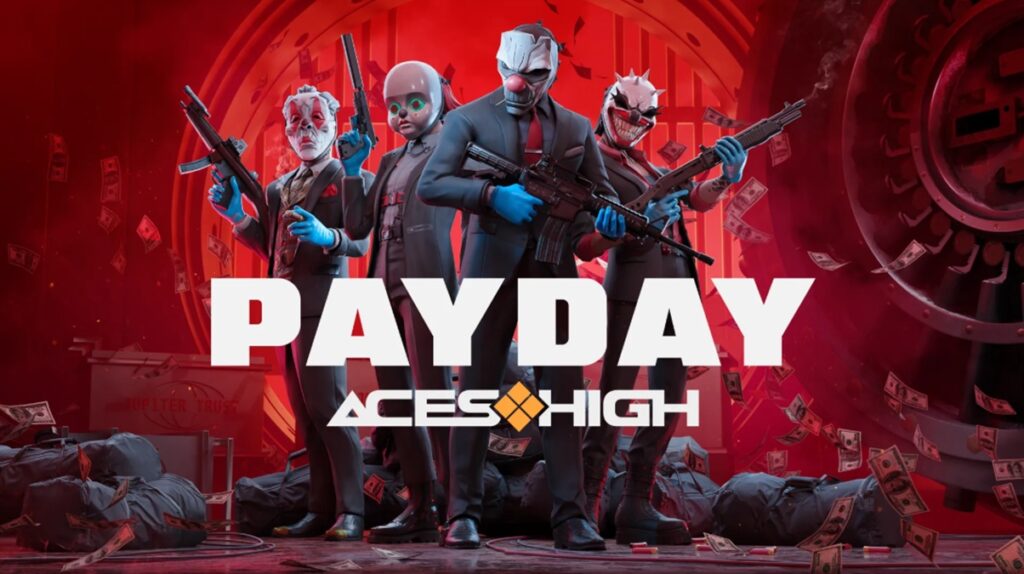
The PAYDAY franchise finally arrived in VR in 2026 with PAYDAY: Aces High, a co-operative heist game from Fast Travel Games. Players form a team of up to four heisters, planning and executing jobs involving banks, museums and other heavily secured locations.
As with the original series, missions can be approached through stealth or direct combat, with players choosing weapons, gadgets and abilities to suit their preferred playstyle. The VR implementation places considerable emphasis on physical interaction, with players handling weapons, operating equipment and coordinating their movements during each job. For fans of co-operative shooters, it offers a different alternative to conventional zombie survival games and arena-based multiplayer experiences.
Finding the Best VR Game for You
VR now covers a much broader range of genres than it did when the first consumer headsets arrived. Players can take part in enormous open-world RPGs, realistic flight simulations, co-operative adventures and even traditional sports, all from inside a headset. The important thing is that there isn’t one type of VR game that everyone needs to enjoy. The variety is one of VR’s greatest strengths, and the games in this article provide a good starting point for exploring what the medium has to offer.
Whether you’re buying your first headset or simply looking for something new to add to your library, there’s a good chance you’ll find something worth playing. Be sure to let us know your favourite VR games and genres in the comments below!