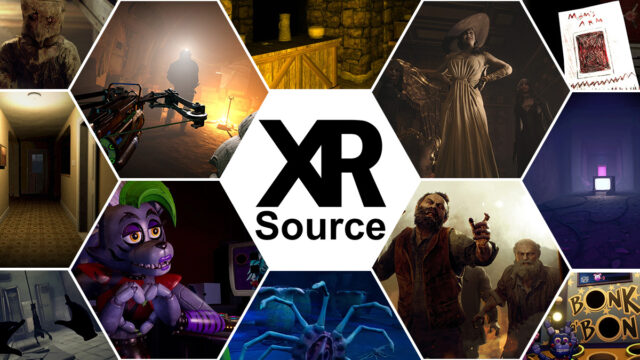
Halloween is here, and there are few better ways to celebrate than putting on a headset and stepping into a genuinely terrifying world. VR has become home to some excellent horror games, ranging from full-length survival horror adventures to psychological thrillers, supernatural investigations and multiplayer ghost hunts. The best take advantage of VR in ways that simply wouldn’t work as well on a conventional screen, making players physically turn to face a threat or handle the equipment they need to survive. Here are some of the best VR horror games worth playing this Halloween, whether you’re after a cinematic single-player campaign or something to experience with friends.


Little Nightmares VR: Altered Echoes
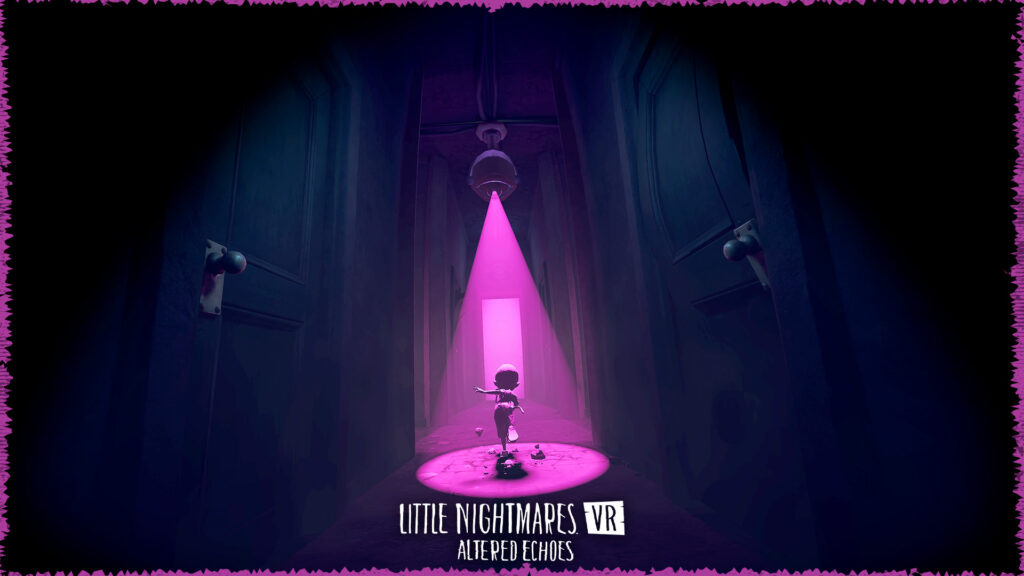
One of the most notable VR horror releases of 2026 is Little Nightmares VR: Altered Echoes. Developed by ICONIK and published by Bandai Namco, the game brings the unsettling world of Little Nightmares into VR for the first time. Players take on the role of Dark Six, exploring a disturbing world filled with oversized environments, unsettling creatures and puzzles that gradually reveal more about her identity. The change to a first-person perspective makes the series’ distinctive visual style feel considerably more immediate, with ordinary objects and familiar locations taking on a much more threatening appearance.
As with the previous Little Nightmares games, the emphasis is on atmosphere, exploration and avoiding danger rather than fighting everything that gets in the way. Players must investigate their surroundings, solve puzzles and find ways past creatures that can easily overpower them. The result is a particularly interesting alternative to the first-person shooters and haunted-house experiences that dominate VR horror. The game’s strange architecture and grotesque scale are well suited to a headset, while the focus on vulnerability makes encounters with larger enemies especially unsettling.


Alien: Rogue Incursion
The Alien franchise has always been a natural fit for VR. The claustrophobic corridors, motion trackers and unpredictable Xenomorphs practically demand to be experienced from a first-person perspective. Alien: Rogue Incursion, developed by Survios, puts players in the role of former Colonial Marine Zula Hendricks. Her mission takes her to the uncharted planet Purdan, where she investigates a Weyland-Yutani research facility that has become infested with Xenomorphs.
The game combines exploration, stealth and combat. Players can use weapons to defend themselves, but ammunition and positioning matter when dealing with enemies that can emerge from unexpected directions. The creatures are designed to remain dangerous throughout the experience, making it important to pay attention to the environment rather than simply charging into every encounter.
There is also a physical element to the equipment. Players can handle their weapons and manage their gear in VR, helping to make each encounter feel more involved than a conventional first-person shooter. For fans of the films, the appeal is obvious. Rather than simply watching a Xenomorph move through the darkness, you’re the person trying to survive its next attack.

Resident Evil 4 VR
Capcom’s Resident Evil series has become one of the most important franchises in VR horror, and Resident Evil 4 remains one of its strongest examples. There are two distinct VR versions worth knowing about. The original Resident Evil 4 received a standalone adaptation for Meta Quest, while the 2023 remake has a separate VR Mode for PlayStation VR2.
The Meta Quest version brings Leon Kennedy’s original mission into VR, with players physically aiming weapons, reloading and interacting with equipment while fighting their way through hostile villages, castles and other environments. The PSVR 2 version uses the considerably more modern remake as its foundation. It features the full main-story campaign in first-person VR, with motion-controller weapon handling, physical reloading, knife combat and support for the headset’s haptic features.
Both versions capture the appeal of Resident Evil 4 particularly well. Encounters can quickly become chaotic, and having to manage weapons and ammunition while enemies close in makes the combat feel considerably more involving. The remake’s opening village sequence is especially effective in VR, turning a familiar encounter into something that feels far more immediate.
Resident Evil Village VR
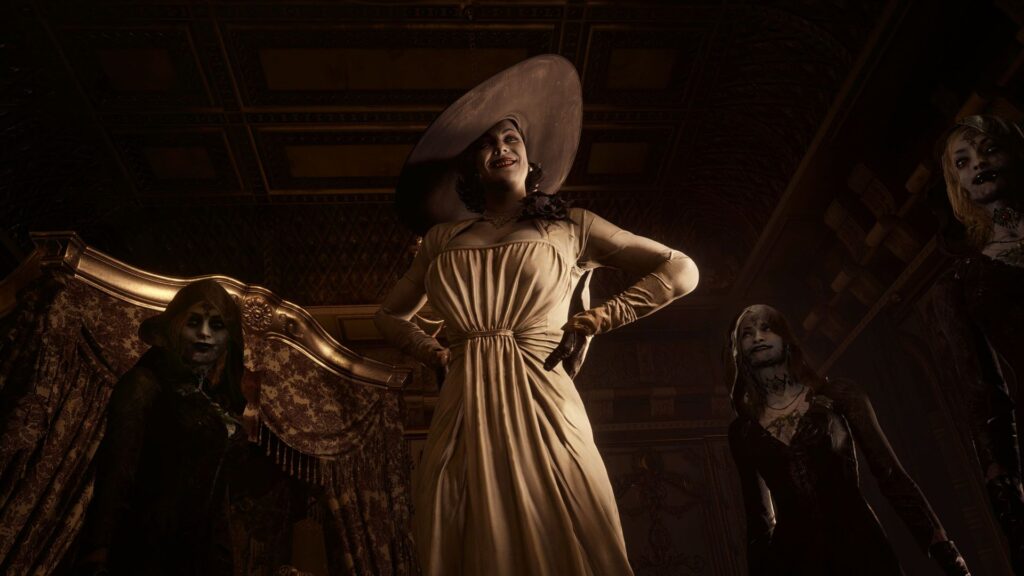
While Resident Evil 4 leans heavily into action, Resident Evil Village offers a different balance of combat, exploration and sustained horror. The game follows Ethan Winters as he searches for his kidnapped daughter in a remote European village populated by hostile creatures and disturbing characters. The journey takes him through several distinct locations, including Castle Dimitrescu and the particularly unsettling House Beneviento.
The VR Mode places players directly inside the first-person campaign. Weapons are handled using the PSVR 2 Sense controllers, while players can use their hands to interact with objects, block attacks and wield weapons in both hands.
The scale of the environments is particularly effective in VR. Castle Dimitrescu feels imposing when explored from a conventional screen, but standing inside its enormous halls makes the experience rather different. The contrast between its grand interiors and the threats lurking within also gives the game a distinctive atmosphere. Then there’s House Beneviento, where weapons are taken away and the focus shifts towards psychological horror. It is one of the strongest reasons to play Resident Evil Village in VR, particularly for anyone who prefers being frightened rather than simply shooting monsters.
MADiSON VR
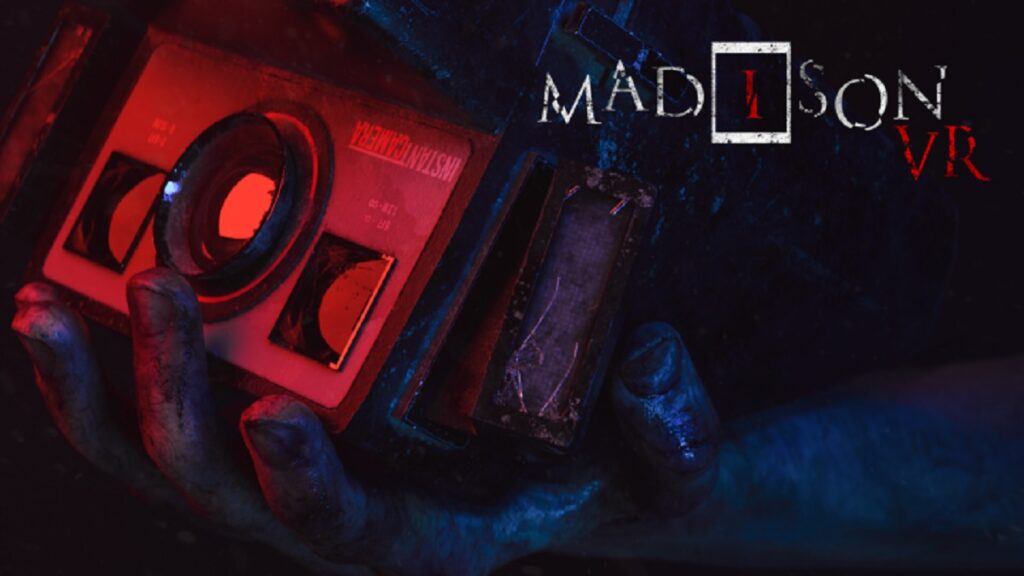
For anyone looking for something more focused on psychological horror, MADiSON VR deserves serious consideration. The game places players in the role of Luca, who wakes up in a dark room with blood on his hands and becomes caught up in a disturbing ritual connected to a demonic presence. What follows is a first-person horror adventure built around exploration, puzzles and unpredictable supernatural encounters.
The most distinctive mechanic is the instant camera. Players must use it to photograph their surroundings, reveal hidden details and solve puzzles, physically handling the device as they investigate the game’s increasingly disturbing environments. That gives the camera a role beyond simply being a tool for taking pictures. It becomes an essential part of how players understand the world, while also encouraging them to look more carefully at the things around them.
The game’s approach to horror relies heavily on atmosphere, sudden disturbances and the fear of not knowing what is waiting around the next corner. It is less about fighting enemies and more about trying to understand what is happening while surviving the experience. The VR adaptation makes the act of using the camera particularly involving, with players physically handling it and developing their photographs as they uncover the story.

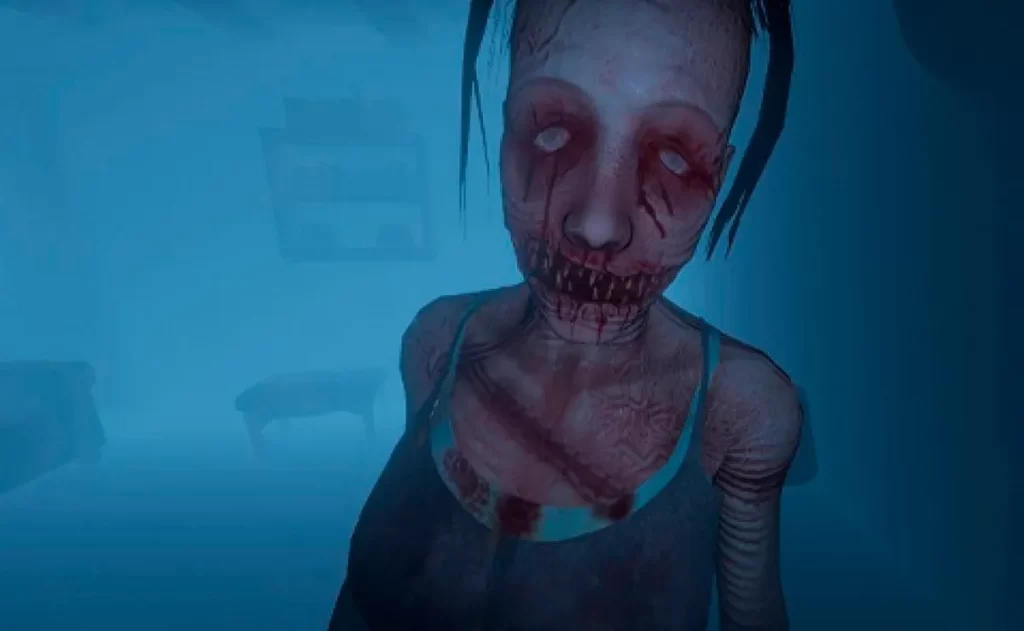
Phasmophobia
Horror doesn’t always have to be a solitary experience. In fact, some of the genre’s best moments happen when you’re trying to persuade your friends to enter a supposedly haunted building while everyone else is looking for an excuse to leave. Phasmophobia has built its entire concept around that idea.
Teams of up to four paranormal investigators enter haunted locations to identify the entity responsible for the activity. Players use equipment such as EMF readers, thermometers, cameras and spirit boxes to gather evidence, gradually narrowing down which type of ghost they’re dealing with. The investigation is only part of the challenge. As activity escalates, players have to work out whether to continue gathering evidence or retreat before the situation turns dangerous.
VR gives the experience an added physical dimension. Players can handle their equipment, open doors, search rooms and communicate with their teammates while trying to keep track of what is happening around them. The game’s unpredictable encounters also create plenty of opportunities for panic. A quiet investigation can turn into a frantic escape, and a teammate’s decision to investigate one more room can leave everyone else regretting the idea.
Phasmophobia supports VR on PC and PlayStation VR2, with crossplay allowing players on supported platforms to investigate together. It continues to receive substantial updates, making it a particularly suitable choice for groups looking for something to play during Halloween.

Metro Awakening
Metro Awakening takes players into the underground tunnels of a post-apocalyptic Moscow, where humanity has survived by taking refuge in the Metro system. Set in 2028, the game follows Serdar, a doctor searching for his wife and the medication she desperately needs. His journey takes him through dark tunnels, abandoned stations and hostile environments inhabited by desperate survivors, mutants and supernatural threats.
The game combines stealth, exploration and combat, but survival depends on much more than simply having a weapon ready. Players must manage ammunition, maintain their gas mask and filters, and make use of limited resources while exploring the darkness. These mechanics are particularly effective in VR. Putting on a gas mask, checking equipment and handling weapons becomes part of the experience, while the need to manage filters and ammunition creates an additional sense of vulnerability.
The game also places considerable emphasis on atmosphere. Flickering lights, dark tunnels and distant sounds help create a constant feeling that something dangerous could be lurking nearby. Unlike a conventional action game, where the player can simply charge into a room, Metro Awakening frequently rewards patience and careful observation.


Five Nights at Freddy’s: Help Wanted 2
The Five Nights at Freddy’s franchise has always relied on the fear of being watched, with its animatronic characters becoming increasingly threatening as players try to survive. Help Wanted 2 adapts that formula into a collection of VR minigames and tasks set within the world of Fazbear Entertainment.
Players take on the role of a new employee, completing jobs involving restaurant maintenance, food preparation, arcade activities and other tasks. What might initially seem like routine work can quickly become unsettling as familiar characters appear and the game begins to turn ordinary situations into sources of tension. The physical interactions are central to the experience. Players handle objects, operate machinery and carry out tasks using their hands, often while dealing with the threat of something going wrong.
That makes the game particularly effective when it combines simple activities with horror. Rather than constantly fighting enemies, players are often occupied with a task while remaining aware that an animatronic could appear at any moment. The game also provides a different style of horror from the slower survival experiences elsewhere on this list. Its shorter scenarios make it suitable for players who prefer a series of distinct encounters rather than one continuous campaign.

Dreadhalls
Sometimes, the simplest horror concepts are the most effective. Dreadhalls has been frightening VR players since its early development as a prototype, and its basic premise remains easy to understand: you’re trapped in a vast dungeon and must find a way out.
You have no arsenal of powerful weapons and no reliable way to defeat the creatures wandering the corridors. Instead, you must use stealth, listen carefully for nearby threats and manage the light that helps you navigate the darkness. The dungeon’s layout is procedurally generated, so its corridors and rooms can change between attempts. That uncertainty prevents players from relying entirely on memorising a route, while the limited light makes exploration particularly tense.
The game also uses positional audio to communicate danger. Listening for movement and trying to determine where a creature might be becomes a key part of survival, particularly when the darkness makes it difficult to see what lies ahead.
Although Dreadhalls is considerably older than most of the games on this list, its focus on vulnerability and survival still makes it a strong choice for Halloween. It also avoids the elaborate combat systems and scripted sequences found in many modern horror titles.
Which VR Horror Game Should You Play This Halloween?
There are so many options for scary or spooky experiences in VR, it’s hard to decide on one definitive game for all. Whether you’re looking for jump scares or haunted adventures, VR has a vast catalogue of games to suit every taste. So much so, that it’s very hard to categorise them all in a single article.
So what’s your favourite VR horror game? Let us know in the comments below!