
Some of the best new VR experiences aren’t actually VR games. Over the years, modders have transformed conventional PC games into VR experiences, adding motion controls, physical interaction and entirely new ways to explore familiar worlds. Some of these projects are remarkably complete, while others remain experimental, but the best VR mods demonstrate just how much VR can change a game. Below are eight of the best VR mods that completely transform their games. Including some particularly interesting additions to the scene in 2026.


Titanfall 2 VR
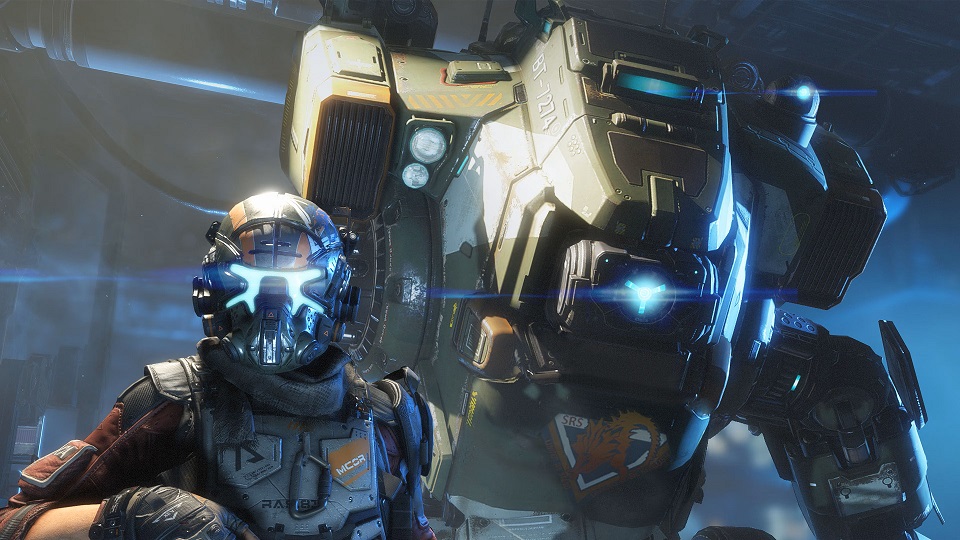
One of the most exciting recent additions to the flatscreen-to-VR scene is Titanfall 2 VR. This is a community conversion that brings Respawn Entertainment’s acclaimed first-person shooter into VR. Developed by CircuitLord, the modification adds stereoscopic rendering, tracked VR controls, full-body inverse kinematics, manual weapon reloading and interactive Titan controls. It transforms the original single-player campaign into a VR experience, allowing players to aim weapons with their hands and operate Titan weapons from inside the cockpit.
That last feature is particularly appealing. Titanfall 2 is already known for the agile infantry combat and enormous Titans that dominate the battlefield. Experiencing both perspectives in VR gives the game a new sense of scale.
The movement is equally important. Wall-running, double-jumping, sliding and grappling are all central to the experience, and the modification attempts to preserve that speed and fluidity in VR. It is an impressive achievement, although the amount of rapid movement means it won’t suit everyone.
The mod is available through CircuitLord’s VR Mod Installer on GitHub, which automates installation and keeps the VR setup separate from the standard game installation. There are some limitations however, and players susceptible to motion sickness should approach it cautiously. Nevertheless, this is a particularly compelling example of a community project doing something that the original developers never officially delivered.


Star Wars: Galactic Racer VR + Motion
The recently released Star Wars: Galactic Racer is a natural candidate for a VR conversion. Its high-speed races, futuristic vehicles and distinctive racing environments are well suited to the feeling of sitting inside a cockpit. The Galactic Racer VR + Motion project from VRGD Studios uses the Universal Unreal Engine VR Mod (UEVR) alongside additional community work to bring the game into VR. It adds a first-person cockpit view, allowing players to race from the pilot’s seat rather than relying on the conventional third-person camera.
That changes the experience considerably. Instead of watching a speeder or podracer from behind, players can look around the cockpit and follow the track from the pilot’s perspective. The package also incorporates motion-simulator support, allowing compatible racing rigs to pitch, roll and turn in response to what is happening in the game. This is more ambitious than simply enabling a VR camera. The project combines UEVR, a custom cockpit-camera implementation and motion compensation to keep the virtual view stable while the physical seat moves. Support for compatible steering wheels and control sticks is also provided.
There is an important distinction, however: this isn’t an official VR release, nor is it a conventional motion-controller conversion. The setup is primarily designed around PC VR, cockpit viewing and compatible motion-simulation hardware. Its full motion features require additional equipment, so it isn’t necessarily the simplest option.
QuakeQuest
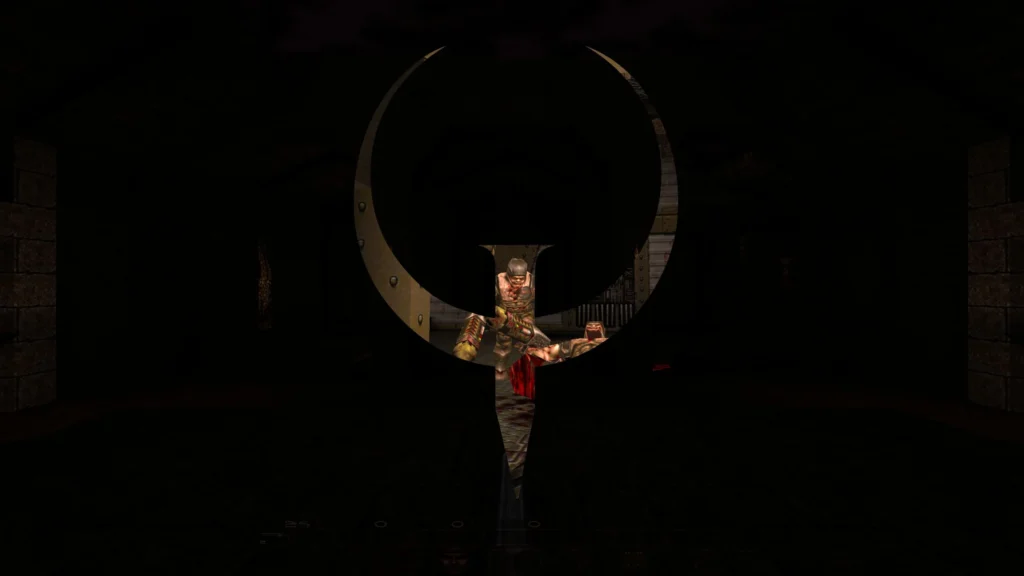
The original Quake helped establish many of the conventions that would define first-person shooters. Its fast movement, labyrinthine levels and aggressive combat remain enjoyable decades later, but its original keyboard-and-mouse controls were never designed for VR. QuakeQuest, developed by Team Beef, brings the classic shooter to standalone OpenXR headsets – including the Meta Quest – using a modified version of the DarkPlaces engine.
Rather than simply displaying the game on a virtual screen, the conversion introduces six-degrees-of-freedom head tracking and motion-controller support. Players can aim weapons using their dominant hand, move through the environment using the thumbsticks and experience the game’s environments in stereoscopic 3D. That makes the difference between revisiting a classic shooter and physically entering its levels. The original game’s dark corridors, elaborate environments and enormous enemies take on a different character when viewed from inside a headset.
QuakeQuest also supports additional modifications, opening the door to further experimentation beyond the original shareware content.
The installation does require a little more work than a conventional VR game. The project provides the shareware version, while players who own the full game must supply the corresponding data files themselves. You can find the source code and setup instructions on the official QuakeQuest GitHub repository.
Half-Life 2 VR
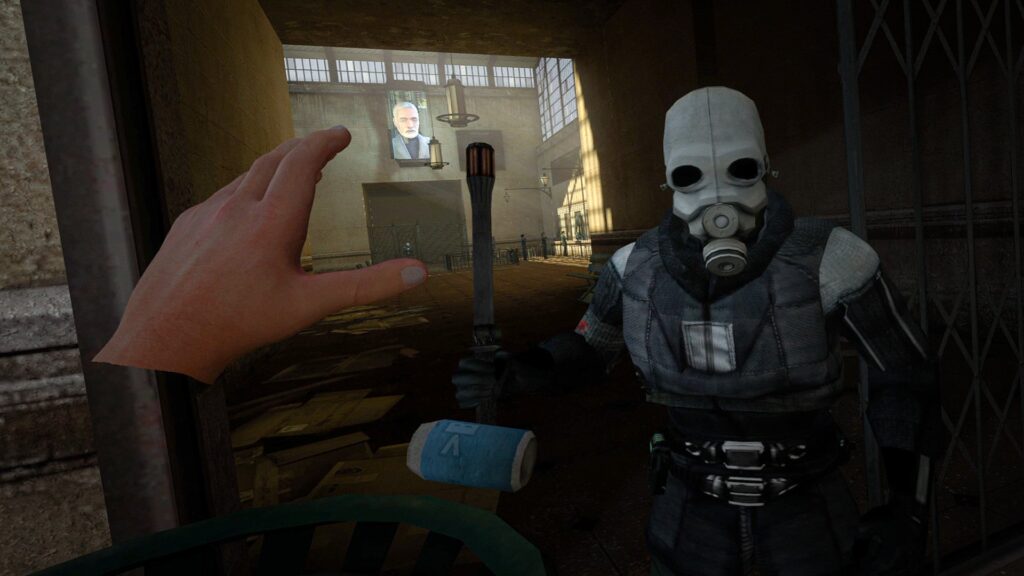
Valve’s Half-Life 2 remains one of the defining first-person shooters, but its original presentation was never designed for virtual reality. The Half-Life 2: VR Mod, developed by the Source VR Mod Team, changes that substantially. Available free on Steam to owners of the original game, the modification converts the entire campaign into a roomscale VR experience with tracked motion controllers.
Instead of simply aiming a weapon with a mouse, players handle their guns using their virtual hands. Weapons can be aimed through their sights, two-handed guns can be held realistically, and reloading can be performed manually. Ammunition can be stored over the shoulder, while objects can be picked up and thrown using physical movements.
Even familiar interactions become different. Players can physically climb ladders, handle objects with the gravity gun and explore locations such as Ravenholm from a much more immediate first-person perspective. The mod also includes comfort options, including teleportation movement and motion vignettes, allowing players to adapt the experience to their preferences.
The project has subsequently expanded beyond the original campaign, with separate VR adaptations of Half-Life 2: Episode One and Episode Two. The result is more than a way of looking at Half-Life 2 through a headset. It takes one of gaming’s most influential shooters and gives its physics, weapons and environments a new physical dimension.

Minecraft – Vivecraft
Minecraft is already a game in which players build, explore and manipulate the world around them. Vivecraft makes those activities physical. The modification transforms the Java Edition of Minecraft into a room-scale VR experience, complete with tracked motion controllers and a range of VR-specific interactions.
Players can swing their hands to mine blocks and fight enemies, draw and aim a bow with both hands, and perform physical movements for activities such as sneaking, swimming and rowing. Roomscale support also allows players to walk around their environments in real space, rather than relying entirely on the conventional movement controls.
One particularly striking feature is world scaling. Players can change their apparent size relative to the world, making familiar structures seem enormous or allowing them to experience the landscape from a much smaller perspective. Vivecraft also supports multiplayer, allowing VR players to join their friends in shared worlds. Additional server-side modifications can provide enhanced support for VR animations and other features.
The main limitation is that Vivecraft is designed for the Java Edition on PC, rather than the Bedrock Edition used by many console and mobile players. Compatibility with Minecraft versions and other modifications varies, so it’s worth checking the project’s current downloads before setting everything up.

Resident Evil VR Mods
Capcom’s Resident Evil series has become one of the most important franchises in VR horror, and community modifications have made several PC entries accessible in VR. Praydog’s REFramework provides a modding framework for games built using Capcom’s RE Engine. Among its features is a VR implementation that supports stereoscopic rendering and six-degrees-of-freedom head tracking, with motion-controller support available for selected games.
The framework supports titles including Resident Evil 2, Resident Evil 3, Resident Evil 7 and Resident Evil Village. For the remakes of Resident Evil 2 and Resident Evil 3, the framework also provides first-person camera support, helping to turn games originally designed around a third-person perspective into more direct VR experiences. That change is particularly significant for the horror elements. Exploring the Raccoon City police station in Resident Evil 2, for example, feels different when you can physically look around its corridors and approach objects from your own perspective.
The modifications do require some care. Features vary between games, and not every title supports the same motion-controller interactions. Some versions may require additional configuration, while performance will depend on the game, the headset and the PC being used.
Capcom has of course released official VR experiences for selected games and platforms, so these community conversions are best understood as an alternative for players who want to experiment with VR on compatible PC versions.

Subnautica – SubmersedVR
Subnautica already has an official VR mode, but its original implementation has limitations. Particularly for players who want to interact with the underwater world using motion controllers. SubmersedVR is a community project designed to modernise the VR experience by adding six-degrees-of-freedom tracking and a more comprehensive set of VR interactions.
The difference becomes apparent when exploring the ocean. Instead of experiencing the world through a conventional controller and a VR camera, players can use tracked hands and interact with equipment more directly as they investigate underwater environments, collect resources and build their bases. That physical presence is particularly effective in Subnautica. The game combines beautiful underwater scenery with an unsettling sense of isolation, and the occasional appearance of a large hostile creature can make the ocean feel considerably more threatening when experienced in VR.
SubmersedVR is still a work in progress, however. The developers explicitly warn that players should not expect a polished or bug-free experience, and the project has compatibility requirements that need to be checked before installation. A separate community project also brings six-degrees-of-freedom VR support to Subnautica: Below Zero.
Lethal Company – LCVR
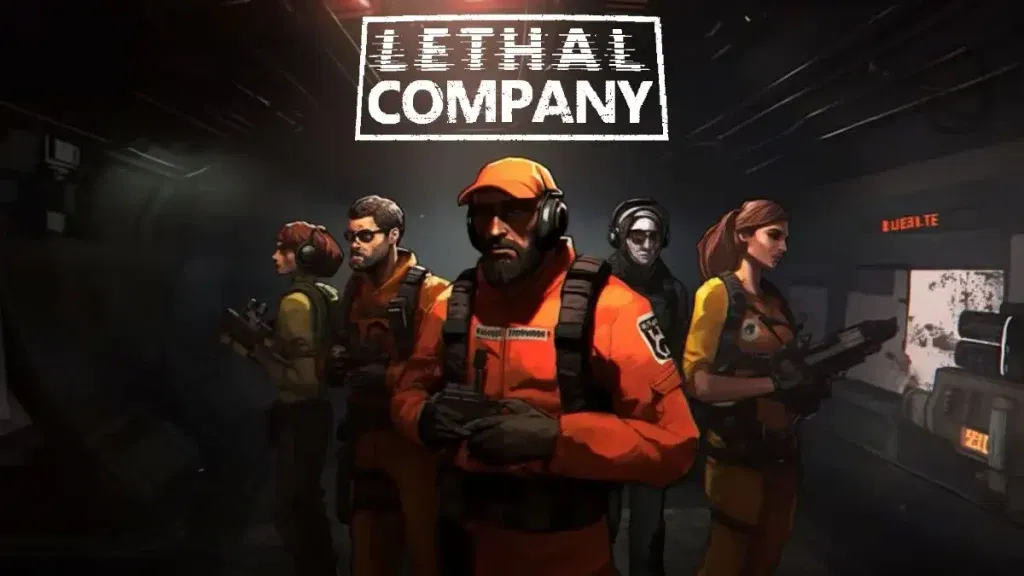
Lethal Company is built around a simple but effective premise: crews travel to abandoned facilities to collect scrap while trying to survive whatever happens to be lurking inside. Its proximity chat, unpredictable encounters and deliberately awkward teamwork have helped make it a particularly memorable multiplayer experience. The LCVR modification adds full six-degrees-of-freedom VR support, including tracked hand movement and motion-based controls.
That changes how players interact with the game. Looking around a dark facility becomes a physical action rather than a simple camera movement, while handling tools and communicating with teammates takes on a different character when everyone is physically present in the environment.
The mod also supports mixed VR and flatscreen multiplayer. Friends without a headset can continue playing the original game alongside VR users, allowing an entire group to participate without everyone needing the same equipment. That is particularly valuable for a co-operative game. The experience depends on communication and the unpredictable behaviour of your teammates, and having VR players physically looking around and moving their hands can make those encounters even more entertaining.
LCVR does have compatibility limitations, particularly when combined with other gameplay modifications. Players should check the current supported game version and compatible mod list before installing it.
The Best VR Mods Open Up New Possibilities
The projects in this article demonstrate just how much a community modification can change a game. Titanfall 2 gains physical weapon handling and interactive Titan cockpits. Half-Life 2 becomes a roomscale shooter, while Vivecraft makes building and exploring in Minecraft a more physical experience. QuakeQuest takes a classic shooter into standalone VR, and REFramework opens up several Resident Evil games to new perspectives.
Not every modification offers the same level of polish, and some require considerably more setup than others. Compatibility can also change when a game is updated, so it is worth checking the installation instructions before committing to a particular project.
But these mods illustrate why the VR community remains so important. When developers don’t create an official VR version, modders sometimes find ways to make it happen themselves.
There’s a flood of new VR mods hitting the scene currently. Indeed, by the time you read this article I fully expect it to be outdated! To that end, be sure to let us know your favourite new VR mods in the comments below.