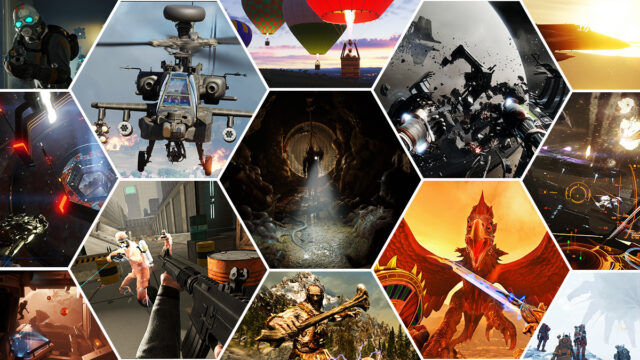
VR has given developers an opportunity to attempt things that would be difficult to recreate on a conventional screen. There have been games that attempted to deliver the scale of a traditional AAA adventure, simulations that recreate entire galaxies, and projects that focus on making every interaction feel physically convincing. Some were built specifically for VR, while others brought enormous existing games into the headset. However, ambition doesn’t necessarily mean a game gets everything right. Some of the biggest projects have struggled with performance, technical limitations or design compromises. But these are the games that attempted something particularly significant, whether through their scale, complexity, production or approach to immersion. Below are 10 of the most ambitious VR games ever made.

Half-Life: Alyx
When Valve returned to the Half-Life universe in 2020, it didn’t simply adapt an existing game for VR. The company built an entirely new, full-length adventure around the capabilities of VR. Half-Life: Alyx takes place between the events of the original Half-Life and Half-Life 2. Players take control of Alyx Vance as she fights the Combine occupation of City 17.
What makes the game particularly ambitious is the attention given to interaction. Players physically rummage through shelves for ammunition, handle weapons, manipulate objects and use tools to solve puzzles. Even reloading a gun becomes a sequence of physical actions rather than a conventional button press. The gravity gloves provide a particularly effective solution for retrieving objects at a distance without removing the need for physical interaction. A technique now common in VR games.
Valve also produced a substantial campaign with cinematic environments, detailed characters and a coherent narrative. The important point is that Half-Life: Alyx wasn’t just an attempt to make VR look impressive. It was an attempt to establish what a modern, big-budget VR adventure could be.

Asgard’s Wrath 2
One of the biggest challenges facing standalone VR has been delivering substantial RPGs without the power of a gaming PC. Asgard’s Wrath 2 set out to address that challenge. Developed by Sanzaru Games for Meta Quest, the 2023 action RPG builds on the original Asgard’s Wrath with a much larger adventure designed specifically for standalone hardware. Players take on the role of a Cosmic Guardian, exploring vast realms inspired by Egyptian mythology while attempting to stop Loki from threatening the fabric of reality.
The game’s scale is particularly impressive for a Meta Quest-exclusive production. It combines extensive environments, character progression, equipment, puzzles, exploration and physics-based combat into a continuous adventure rather than a collection of shorter VR levels. Players also inhabit different mortal heroes, each with their own abilities and approach to combat. This allows the game to introduce new mechanics and play styles as the adventure progresses.
The physical combat is another major part of its ambition. Weapons are handled through motion controllers, and encounters involve blocking, striking and using different abilities against a wide variety of enemies. Sanzaru also developed an extensive haptic system, creating hundreds of distinct effects to help communicate the feel of weapons, environments and other interactions through the controllers.
The technical achievement is just as important. The studio had to deliver large environments, detailed characters and a substantial RPG system while working within the capabilities of Meta Quest 2 and Meta Quest 3. It is one of the clearest examples of a VR game attempting the scope of a traditional action RPG without relying on a gaming PC.

No Man’s Sky
Few games have attempted anything quite like No Man’s Sky. Hello Games created a procedurally generated science-fiction universe built around exploration, survival, trading, combat and construction. Players can travel between star systems, land on alien planets, discover unfamiliar wildlife, build bases and explore alongside other players. The VR version takes that entire experience into a headset.
When Hello Games introduced VR support with the Beyond update in 2019, it was explicit that this wasn’t a separate spin-off. The entire game was being brought into VR, with dedicated interaction systems, redesigned interfaces and motion-controller support.
Players can physically handle their multitool, scan wildlife and minerals, manipulate terrain and operate the controls of their spacecraft. Ships and land vehicles have their own cockpit interactions, while the ability to move seamlessly between planets and space gives the game a remarkable sense of continuity. The scale is what makes it particularly ambitious. There isn’t a single handcrafted world to explore, but a vast procedurally generated galaxy with an enormous variety of environments and activities.
That presents a substantial technical challenge in VR. The game must render stereoscopic environments while maintaining the performance required for comfortable play, all while supporting the same underlying systems used by the conventional version. The project has continued to evolve through substantial free updates, with VR remaining part of the wider No Man’s Sky experience on PC and PlayStation VR platforms. It is a good example of what happens when a game originally designed for traditional screens becomes a much larger VR undertaking in its own right.

Microsoft Flight Simulator 2024
While many VR games attempt to create convincing worlds within a comparatively small environment, Microsoft Flight Simulator 2024 has an altogether different goal. It attempts to recreate the entire planet as a flyable environment.
Developed by Asobo Studio and published by Xbox Game Studios, the simulator combines geographical data, terrain, buildings, airports, weather and atmospheric effects to create a detailed representation of Earth. Players can fly a wide range of aircraft, from light recreational planes to large commercial airliners, across environments based on real locations. That scale is remarkable in itself. But the simulator also attempts to reproduce the systems involved in flying those aircraft.
Cockpit instrumentation, navigation, flight planning, weather conditions and aircraft handling all contribute to the experience. Depending on the aircraft, pilots must manage anything from basic controls to highly complex systems. And of course, VR adds another dimension. Rather than looking at an instrument panel on a monitor, players can examine the cockpit in three dimensions, look out of the aircraft windows and assess the environment around them.
The VR support is an optional mode rather than the foundation of the entire game, and it relies more on conventional flight controls and cockpit interaction than the motion-controller mechanics found in many VR-native titles. Even so, the ambition is substantial. Players can take off from a real airport, fly across a continent and land at another location while experiencing the journey through a headset.
Elite Dangerous
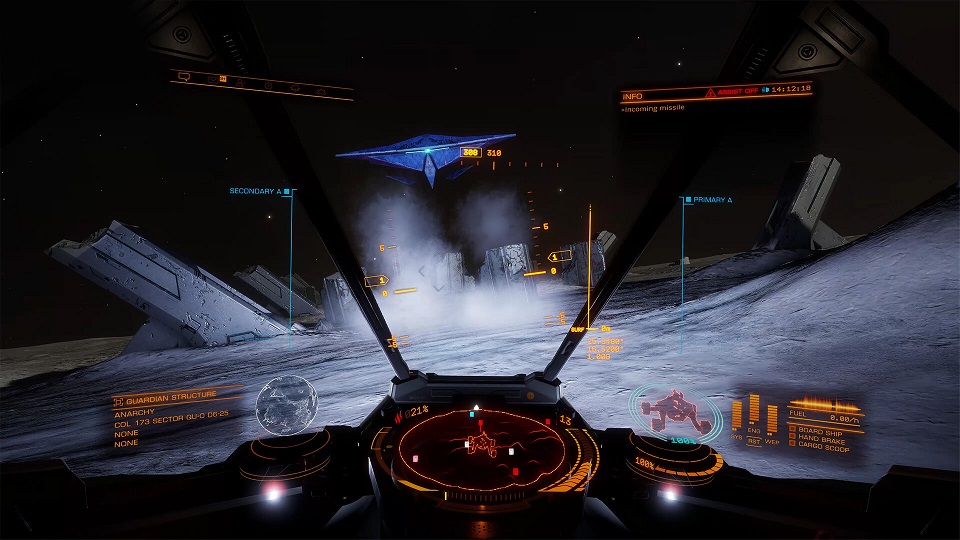
If Microsoft Flight Simulator attempts to recreate Earth, Elite Dangerous attempts something considerably larger. Frontier Developments built a space simulation around a representation of the Milky Way containing approximately 400 billion star systems. The galaxy is based on real astronomical data, with stars, planets, moons and other celestial objects represented at galactic scale.
Players begin with a modest spacecraft and can choose how they want to make their living. Trading, mining, exploration, smuggling, bounty hunting and combat are all possible, while the wider galaxy changes through the activities of other players and evolving in-game events. The scale of the universe is only part of the ambition. Each spacecraft has its own handling characteristics, equipment and systems, requiring players to learn how to manage their ships effectively. Larger vessels can be configured for particular roles, while exploration can involve long journeys into systems that other players have never visited.
VR makes the cockpit particularly convincing. Players can look around the flight deck, examine their instruments and watch enormous celestial objects fill the view outside the ship. The sense of scale becomes especially apparent when approaching a planet or flying close to a star.
There are limitations. Elite Dangerous was not designed exclusively for VR, and its support is primarily associated with ship-based gameplay and surface vehicles. The on-foot gameplay introduced with the Odyssey expansion is not presented as a fully immersive VR experience. Nevertheless, the underlying simulation remains remarkable. Few games attempt to combine a connected multiplayer universe, complex spacecraft systems, a functioning economy and a galaxy of this scale.

The Elder Scrolls V: Skyrim VR
Bringing an enormous open-world RPG into VR is a substantial undertaking in itself. The Elder Scrolls V: Skyrim VR does precisely that, allowing players to explore the province of Skyrim, complete quests, join factions, learn magic and fight dragons in VR.
The VR version includes the complete original campaign alongside the three official add-ons: Dawnguard, Hearthfire and Dragonborn. That means players have access to the game’s extensive world, numerous questlines and additional story content within one VR package. Unlike a short adventure designed around a series of levels, Skyrim VR provides a world that can be explored for dozens or hundreds of hours. Players can follow the main story, pursue side quests, explore dungeons or simply wander through the mountains and forests.
The original game wasn’t built from the ground up for VR, and some of its interactions still feel like adaptations of conventional RPG mechanics. However, the VR version supports motion-controller combat and spellcasting, alongside different movement and comfort options. Its continued importance is also closely tied to the modding community. Players have developed extensive modifications that improve the visual presentation, introduce more convincing physical interactions and address some of the original VR implementation’s shortcomings.
The ambition of Skyrim VR isn’t that it reinvented the game. It’s that it brought an enormous, established RPG into VR with its campaign and supporting systems intact. It remains one of the clearest demonstrations that VR can accommodate much more than compact, self-contained experiences.
Boneworks
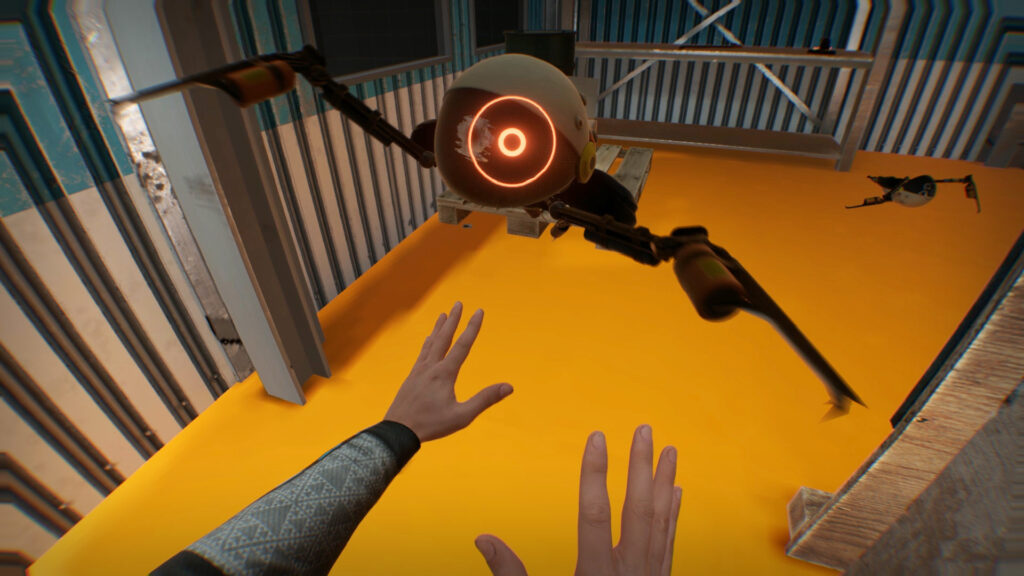
Not every ambitious VR game needs an enormous world. Sometimes, ambition means attempting to simulate the physical rules that govern how a player interacts with that world. Boneworks, developed by Stress Level Zero, is an experimental physics-based action adventure built around that idea. Released in 2019, it was designed to make physical interaction central to almost every aspect of gameplay.
Players can pick up objects, climb structures, wield weapons, manipulate physics-based machinery and use their surroundings to solve puzzles. The game gives the player a simulated body, with physical arms and legs that interact with the environment rather than simply following the headset and controller positions. That approach creates opportunities that conventional first-person games rarely offer. A piece of scenery can become a weapon, a tool can help solve a puzzle, and an object can be used in unexpected ways during combat.
The design also presents challenges. Because the game attempts to simulate physical movement and object interaction, it can be less forgiving than a conventional action adventure, and its locomotion is best suited to players who are already comfortable with VR. The point, however, was never simply to make a traditional shooter with motion controls.
Boneworks was an attempt to create a consistent physical world in which players could experiment with the rules and discover solutions for themselves. Its systems were ambitious enough to influence the studio’s subsequent VR development, including BONELAB. For anyone interested in how far physics-based interaction can be pushed in VR, it remains one of the medium’s most significant experiments.

Lone Echo II
Zero-gravity movement is one of VR’s most distinctive design challenges. Without floors to walk on, conventional locomotion becomes less useful, and developers need to find new ways for players to move through the environment. Lone Echo II, from Ready at Dawn, builds its entire adventure around that problem.
The game returns players to the roles of android Jack and Captain Olivia Rhodes, continuing their story in the rings of Saturn. As Jack, players move through the zero-gravity environment by reaching out to surfaces, pushing away from walls and using equipment to navigate complex spaces. The interaction system is central to the experience. Rather than simply steering a character through a three-dimensional world, players physically pull themselves along, manipulate objects and use tools to solve problems. This also creates a distinctive sense of scale. Large spacecraft, industrial structures and planetary environments can be explored from unusual angles, with the player free to rotate and move through spaces that would be impossible to traverse conventionally.
The game combines this movement system with a cinematic science-fiction story, detailed environments and sophisticated character animation. Its relationship between Jack and Olivia provides a narrative through-line while the player investigates the mysteries surrounding the station and the events unfolding across the game.

DCS World
For players interested in military aviation, Digital Combat Simulator World represents a different kind of ambition. Developed by Eagle Dynamics, DCS World is a military simulation built around detailed aircraft, complex cockpit systems and large-scale combat environments. The base platform is free to download, with additional aircraft, maps and other modules available separately.
The depth of the aircraft systems is one of its defining characteristics. Many aircraft feature interactive cockpits, detailed flight models and simulated sensors, weapons and navigation equipment. Learning to operate a modern combat aircraft can involve understanding an extensive collection of switches, displays and procedures. VR makes those cockpits considerably more involving. Players can look around the flight deck, examine instruments and interact with controls while tracking other aircraft and monitoring their surroundings.
The simulation also extends well beyond the cockpit. DCS World provides large terrain maps, ground units, naval forces, mission-building tools and multiplayer support. Players can create their own missions and campaigns or join others in coordinated operations, including multi-crew flights in compatible aircraft. It is a particularly demanding experience. The detailed aircraft systems require time to learn, and effective VR performance can require a powerful PC, substantial storage and suitable flight controls. But that’s precisely why DCS World belongs in a discussion of ambition. It attempts to recreate complex military aviation systems rather than simply offering an accessible flight game with simplified controls.

Batman: Arkham Shadow
When Batman: Arkham Shadow arrived in 2024, it demonstrated how ambitious a VR-native action adventure could be on standalone hardware. Developed by Camouflaj and published by Oculus Studios, the game is a full-length entry in the Arkham franchise, set between Batman: Arkham Origins and Batman: Arkham Asylum. Gotham City is facing a new threat from the Rat King and his followers, and players must investigate the growing crisis as Batman.
The game retains several of the series’ defining elements, including stealth, detective work, gadgets and close-quarters combat. However, the controls and interactions have been rebuilt around VR. Combat is particularly important. Players use physical movements to strike enemies, block attacks and execute combinations, while Batman’s gadgets provide additional ways to approach encounters. Stealth sections allow players to move through environments, observe guards and decide when to act.
Its ambition lies partly in the production itself. Rather than adapting an existing flat-screen adventure, Camouflaj created an original Arkham game specifically for VR, with the challenge of translating a franchise built around complex combat and cinematic action into a standalone headset experience.
The game is exclusive to Meta Quest 3 and Quest 3S, making it an important example of how developers can push standalone VR hardware without relying on a gaming PC or console. It also demonstrates that a major licensed franchise can support a substantial VR-exclusive adventure, rather than being limited to short promotional experiences.
What Makes a VR Game Ambitious?
These 10 games illustrate that ambition in VR takes several different forms. Half-Life: Alyx and Batman: Arkham Shadow demonstrate what can be achieved when developers build substantial narrative adventures specifically for VR. Asgard’s Wrath 2 shows that a large action RPG can be delivered on standalone hardware, while Boneworks explores the possibilities of creating a consistent physical world around the player.
Not every ambitious game gets everything right, and a large budget or enormous map doesn’t automatically make a better VR experience. The challenge is delivering that scale or complexity without compromising performance, interaction or comfort.
What VR games have you tried that you thought were truly ambitious for their time? Let us know in the comments below!